A collection of walks, discoveries, insights and pictures of exploring Dartmoor National Park
April 11, 2026
Combestone Farm Ash House
Ash Houses on farms (mainly in the north eastern quarter of Dartmoor) were once common sight. The ‘classic’ Dartmoor Ash House is a small circular building with a conical roof, with an earthen or lime-washed floor. The design of the Ash House usually included a small hatch on the farm-side in which the ashes were dumped, with on the opposite side a doorway through which the ashes would be removed. That said, there are examples of rectangular shaped Ash Houses such as the one at Combestone Farm.
Ash Houses were constructed to store unattended ash and embers taken from open fires, a task performed before going to bed, to reduce the risk of embers causing a risk to the thatched building during the night. With open fires, wide chimneys and thatched roofs fire hazards were ever present. Ash Houses were always located well away from the main farmhouse. Accumulated ash would eventually be spread on the land with it being mixed with waste from the kitchen. It is thought that the ash house tradition could possibly date back to the medieval period, albeit there are examples in Devon which may have originated in the 13th century.
Combestone Farm is thought to date from the 14th century with the earliest surviving documentation recording it as Comereston, then variously, in the late 1330s and 1340s as ‘Comerston’, ‘Comeraston’ and ‘Comereston’ (ref: Greeves / Stanbrook). The Middle English “comer(e)” means ‘visitor, guest’ or ‘messenger’. Greeves / Stanbrook suggest that alternatively, there may be a link to wool, with the name meaning a ‘comber’ i.e. ‘one who makes or uses combs’.
Bibliography
Tom Greeves and Elisabeth Stanbrook – (2013) – Combestone Farm, Holne, Devon ; A History
R. Perry – (2010) – ‘A Survey of Ash-Houses’, Trans. Devonshire Assoc.,142, 175-208
English Heritage – (2014) – National Heritage List for England. SDV355683.
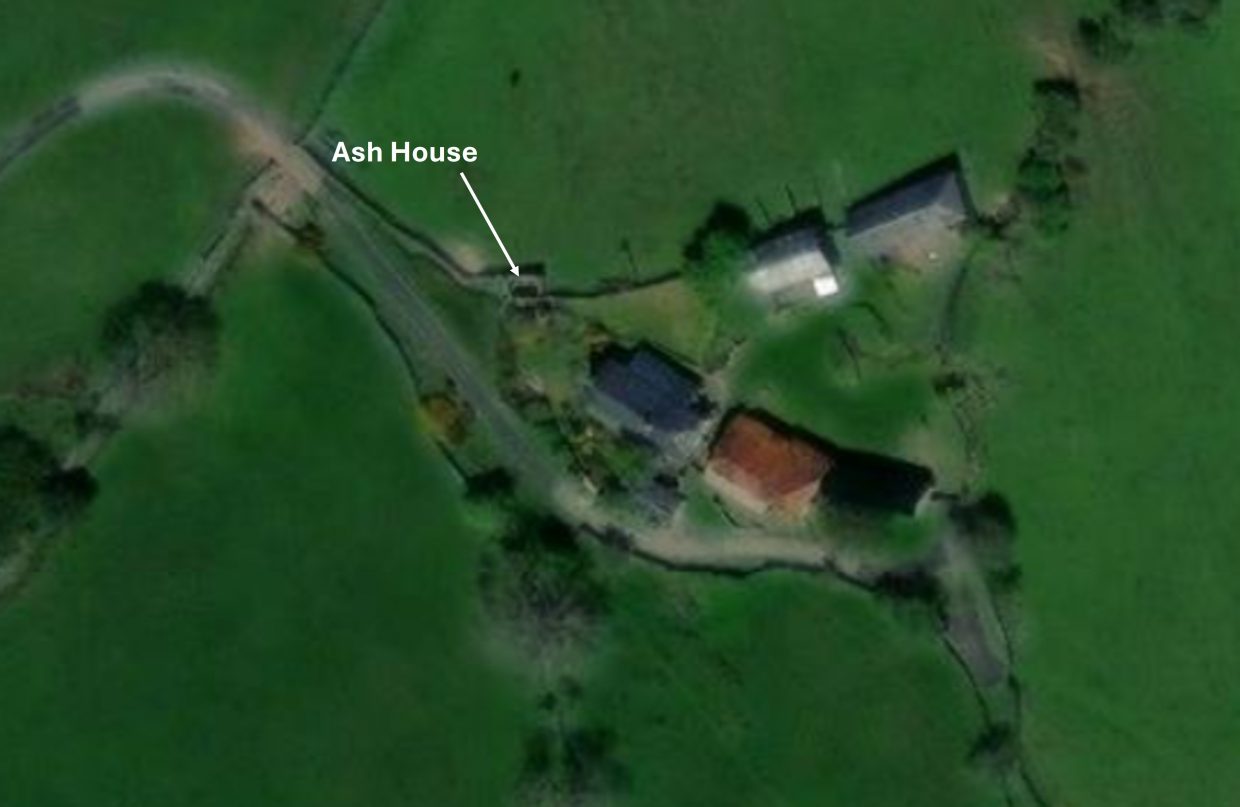
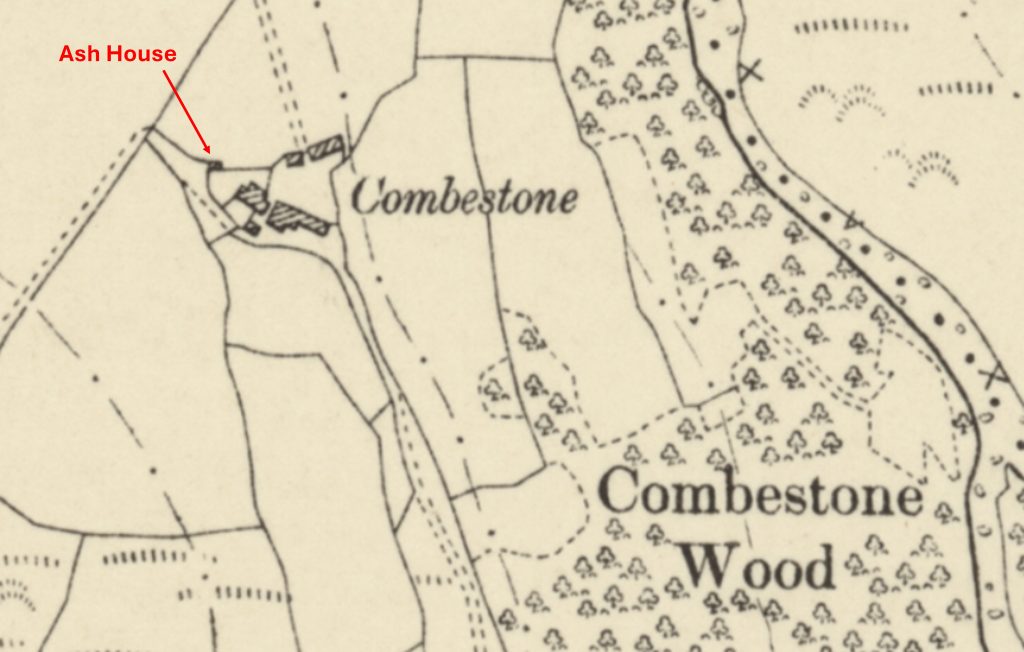
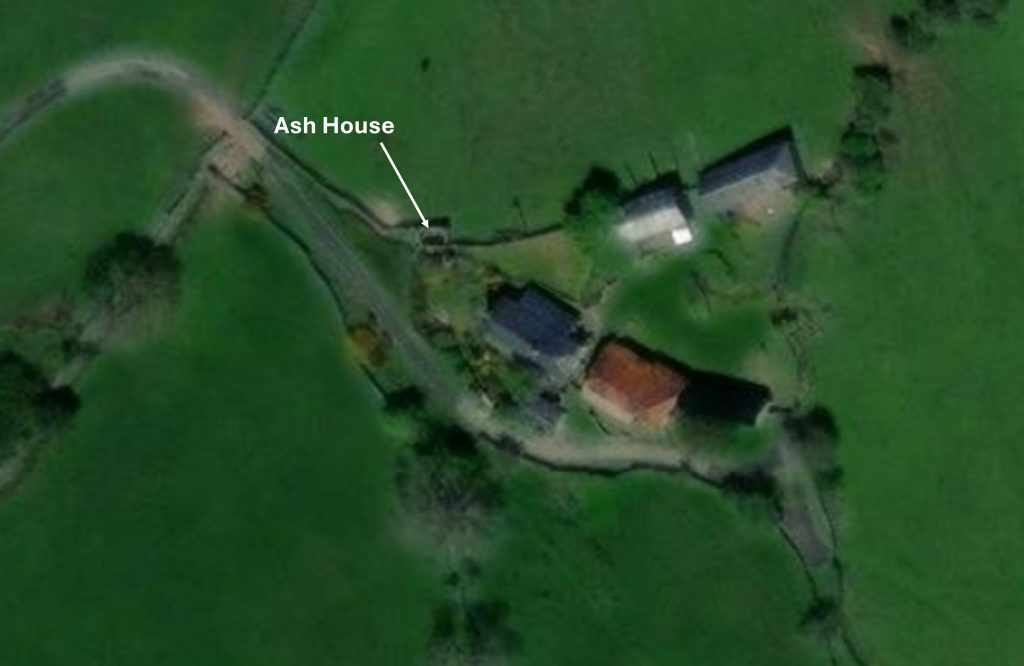
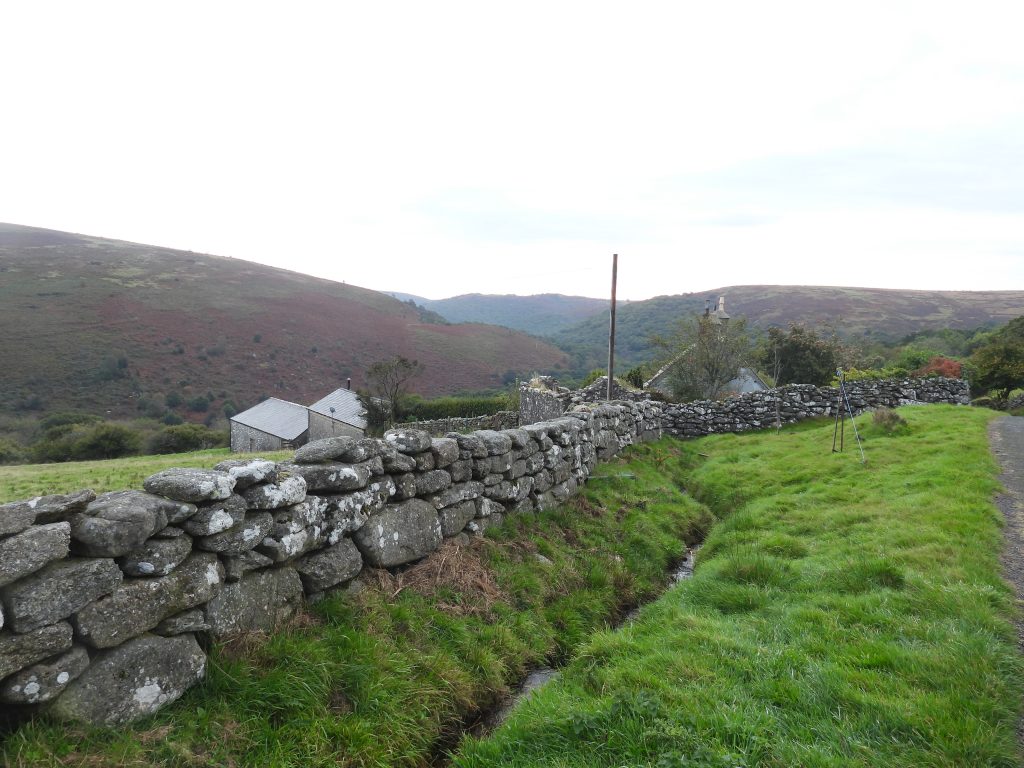
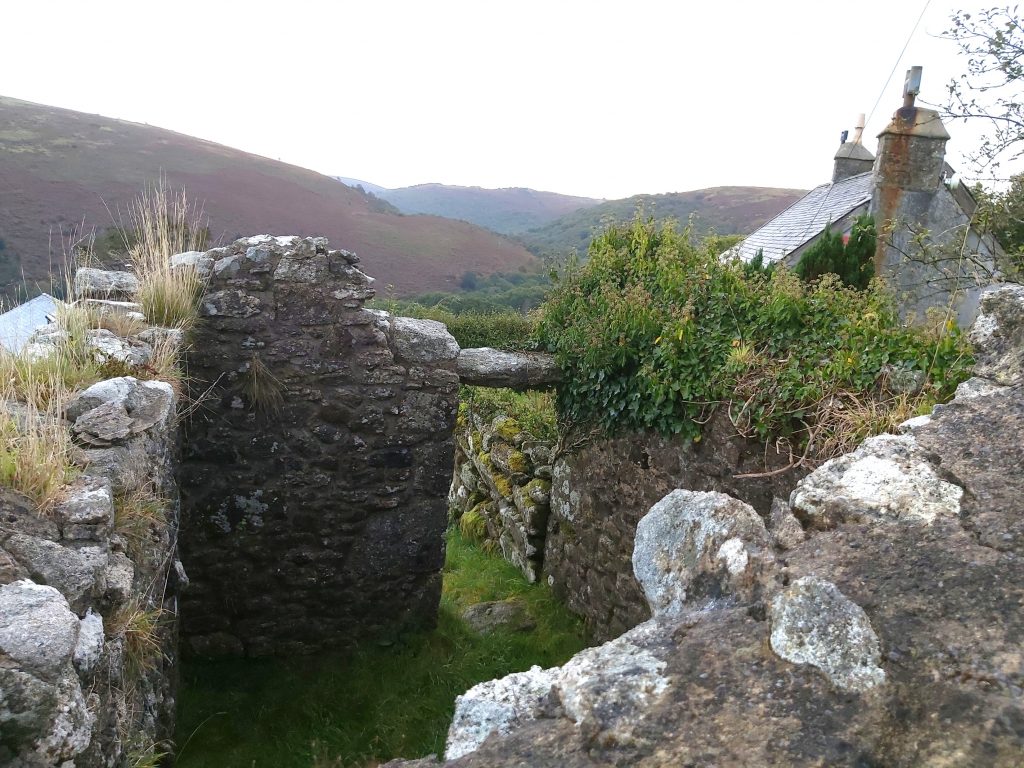
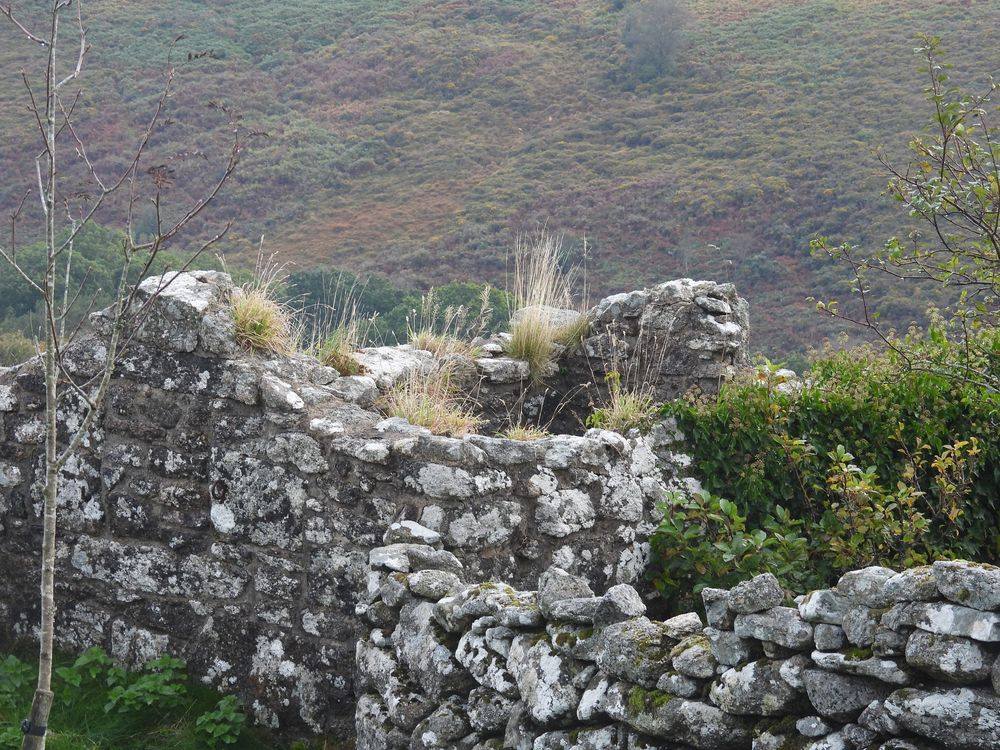
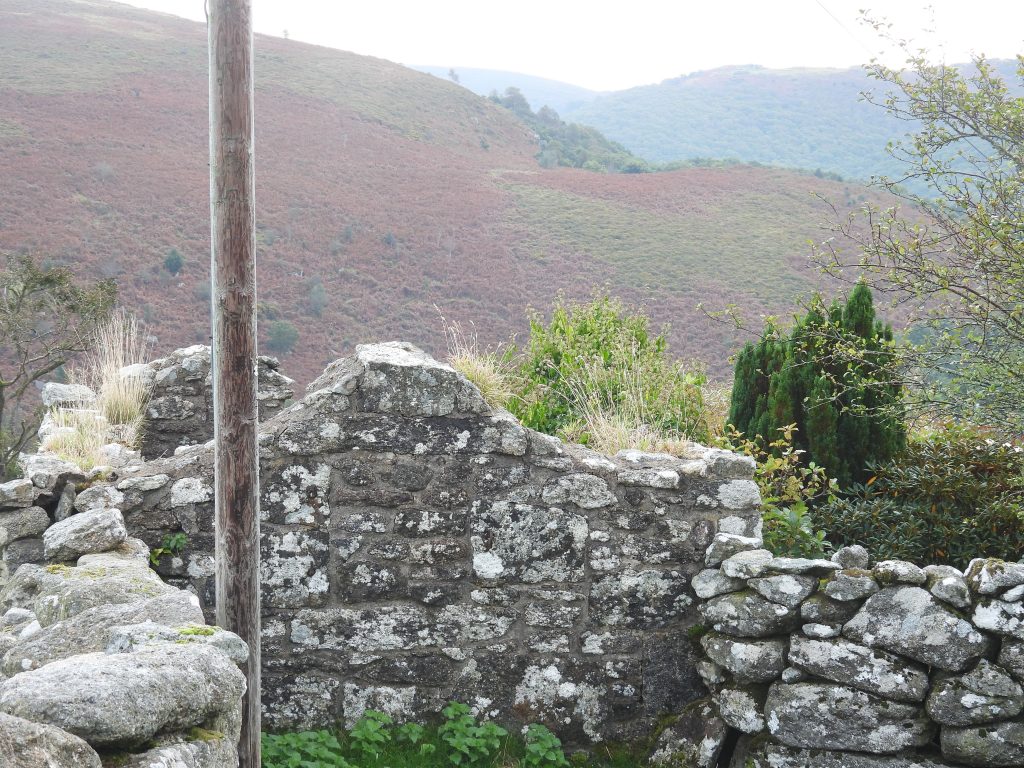
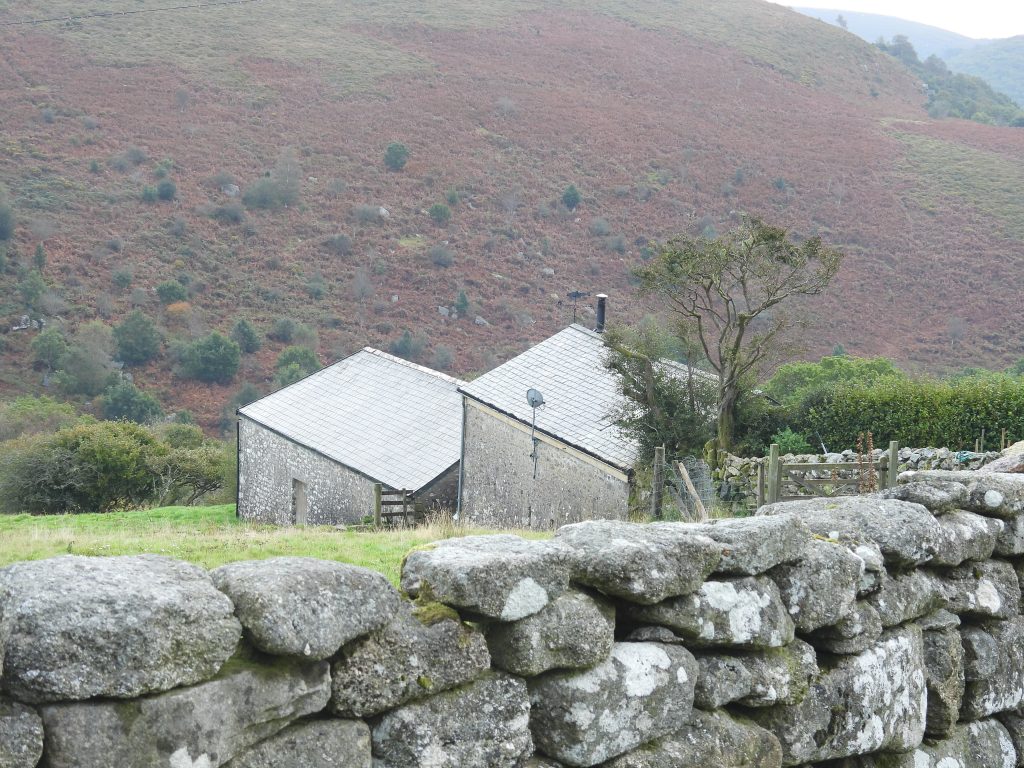
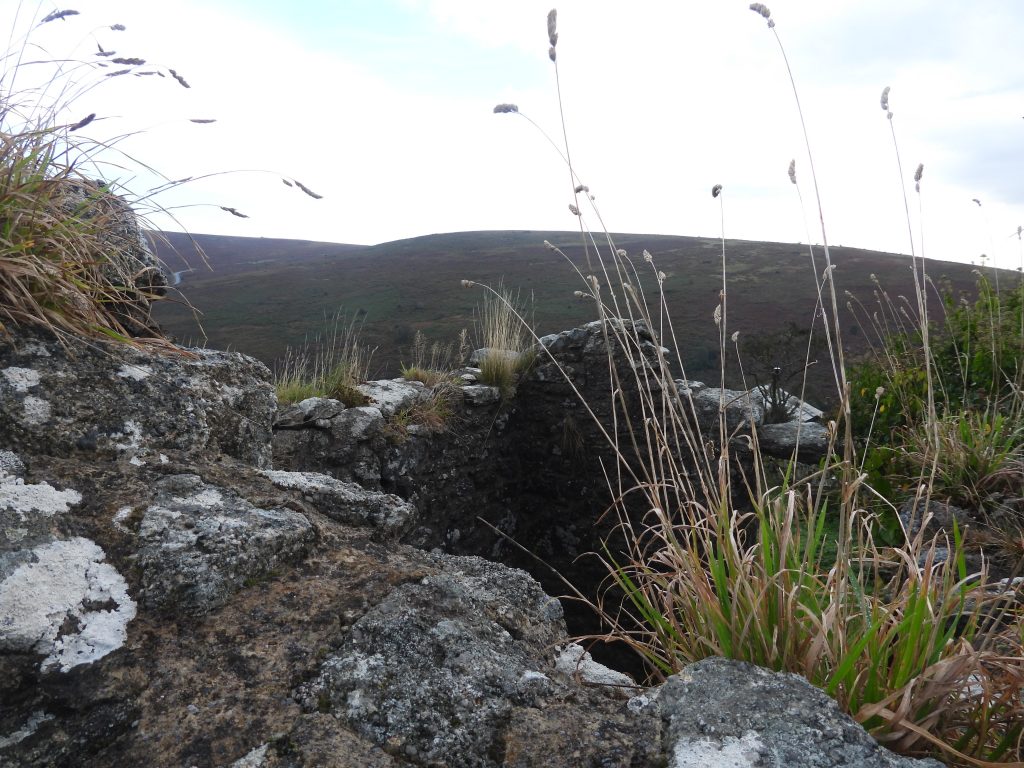
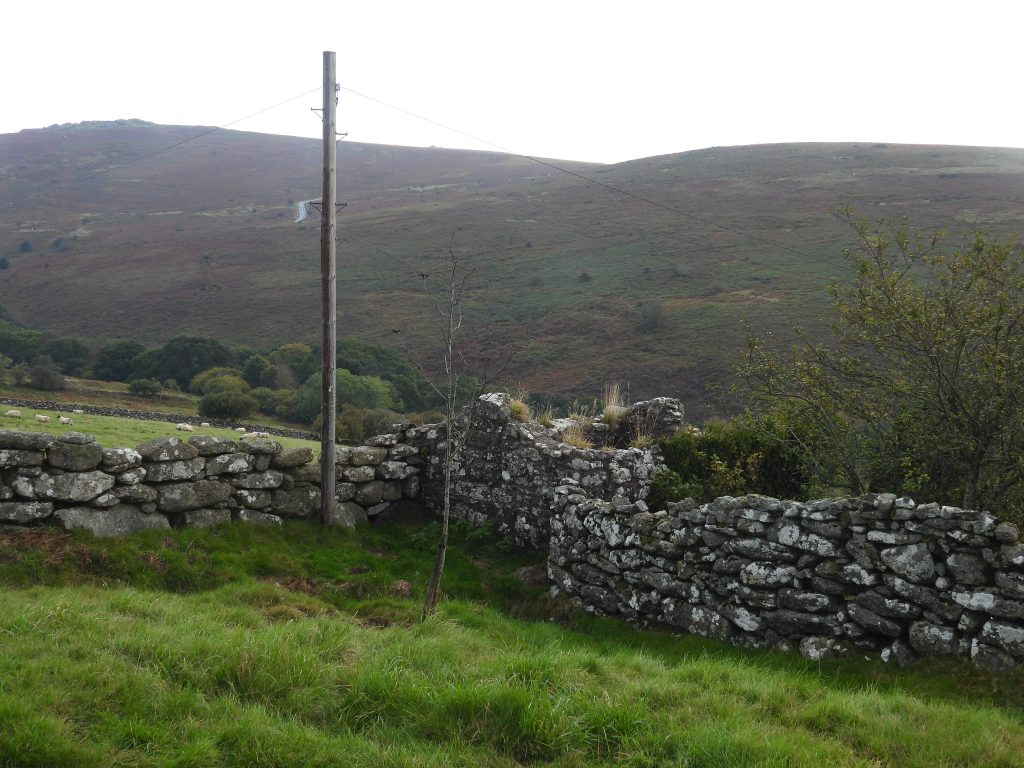
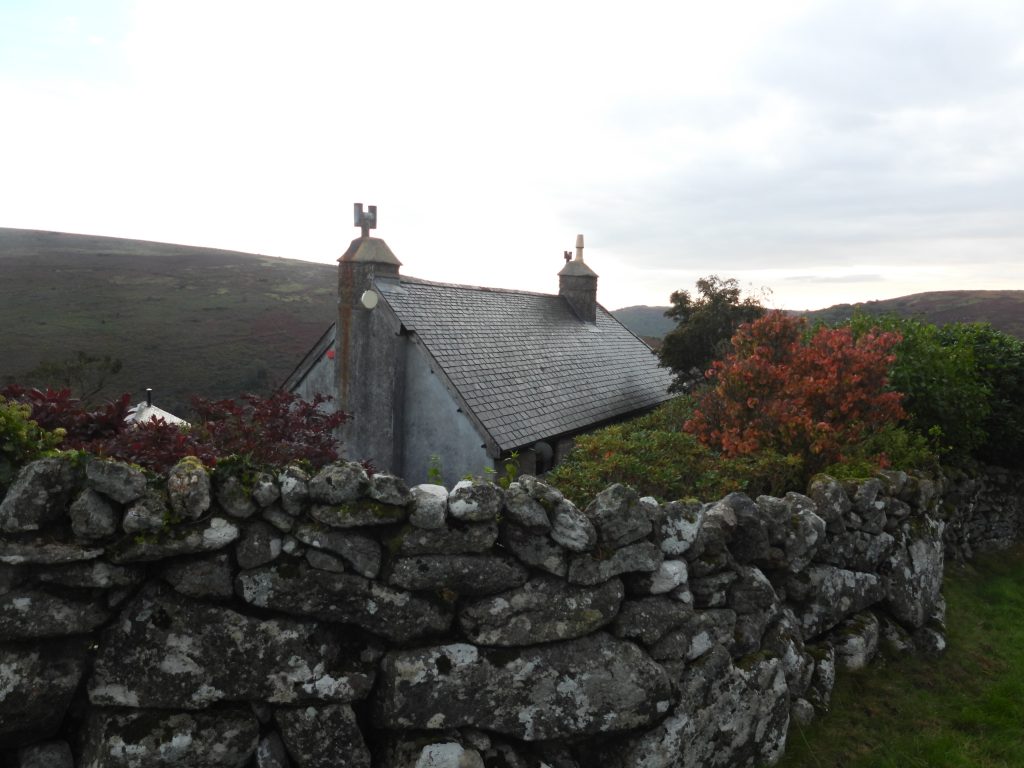
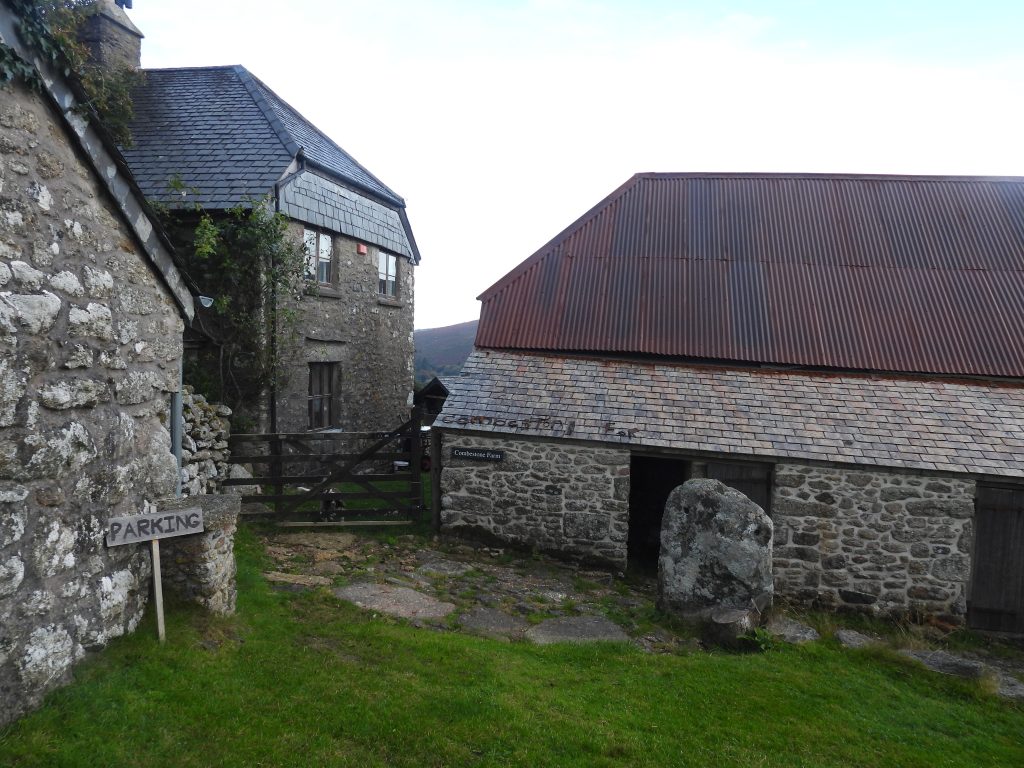
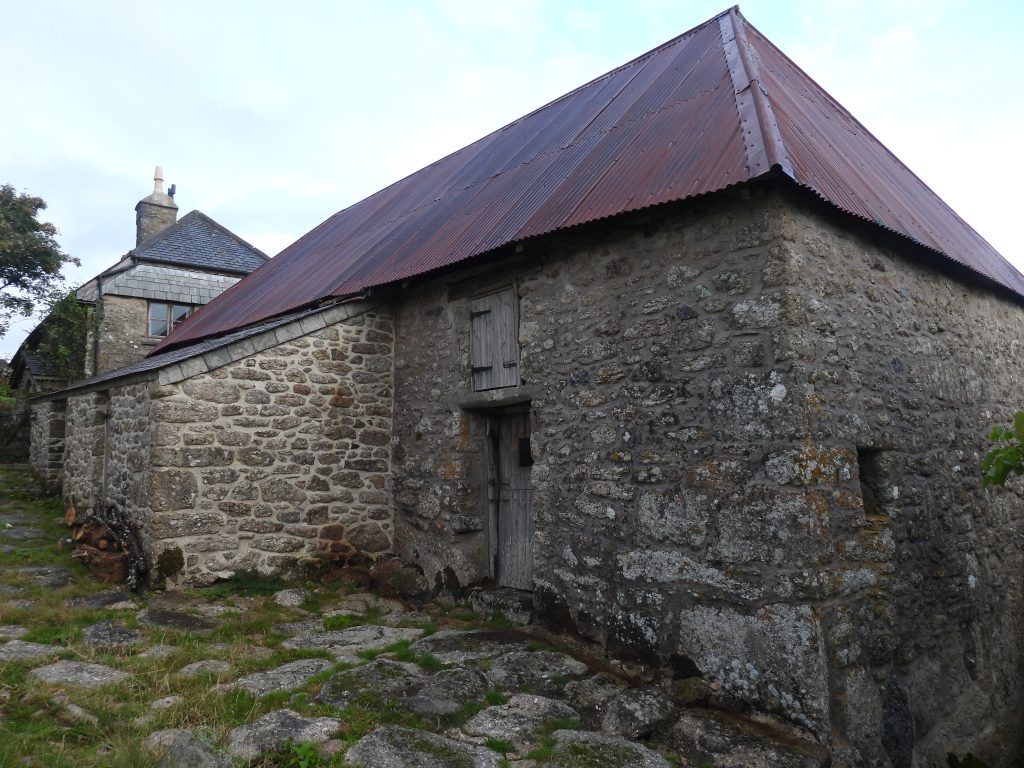
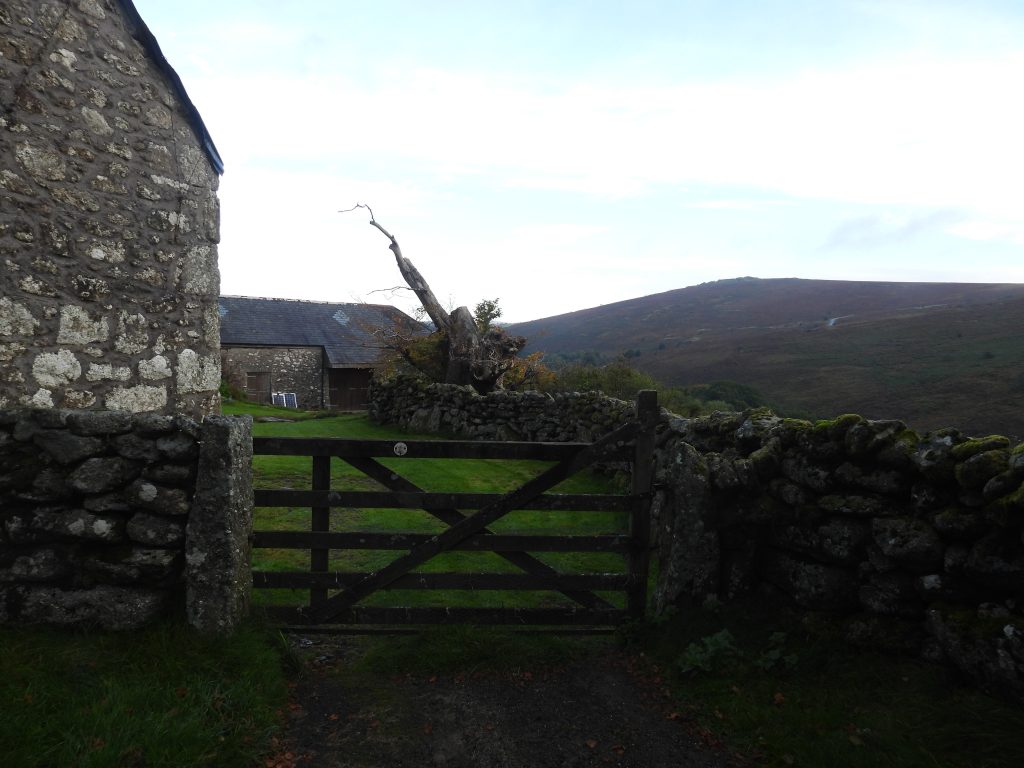
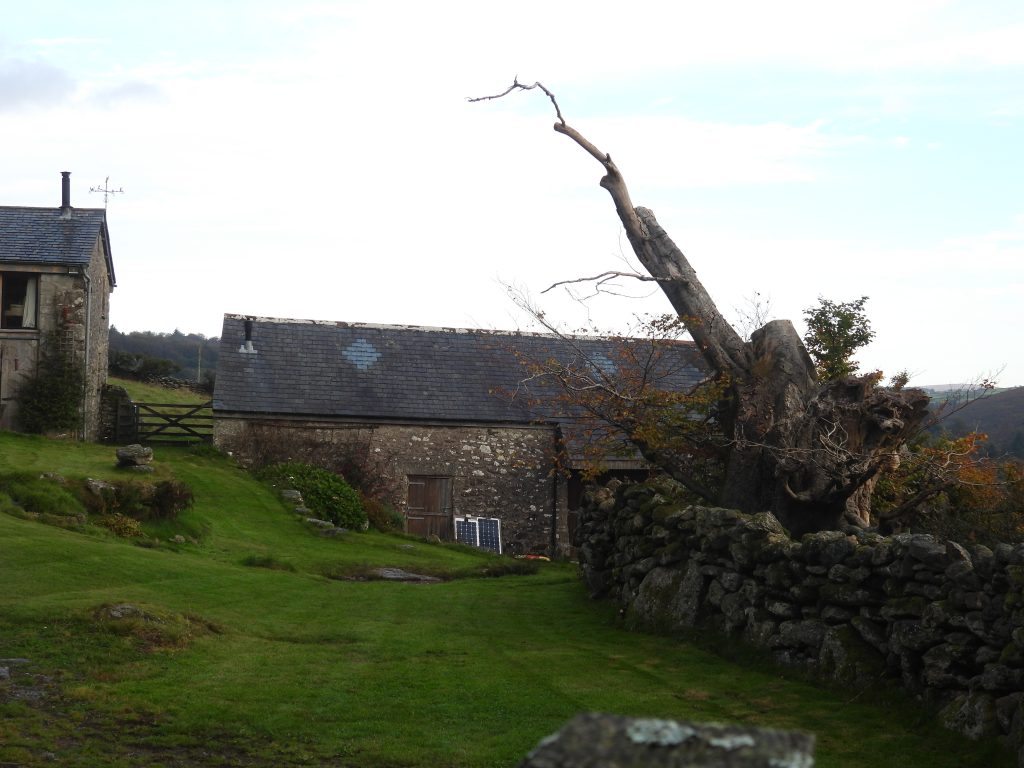
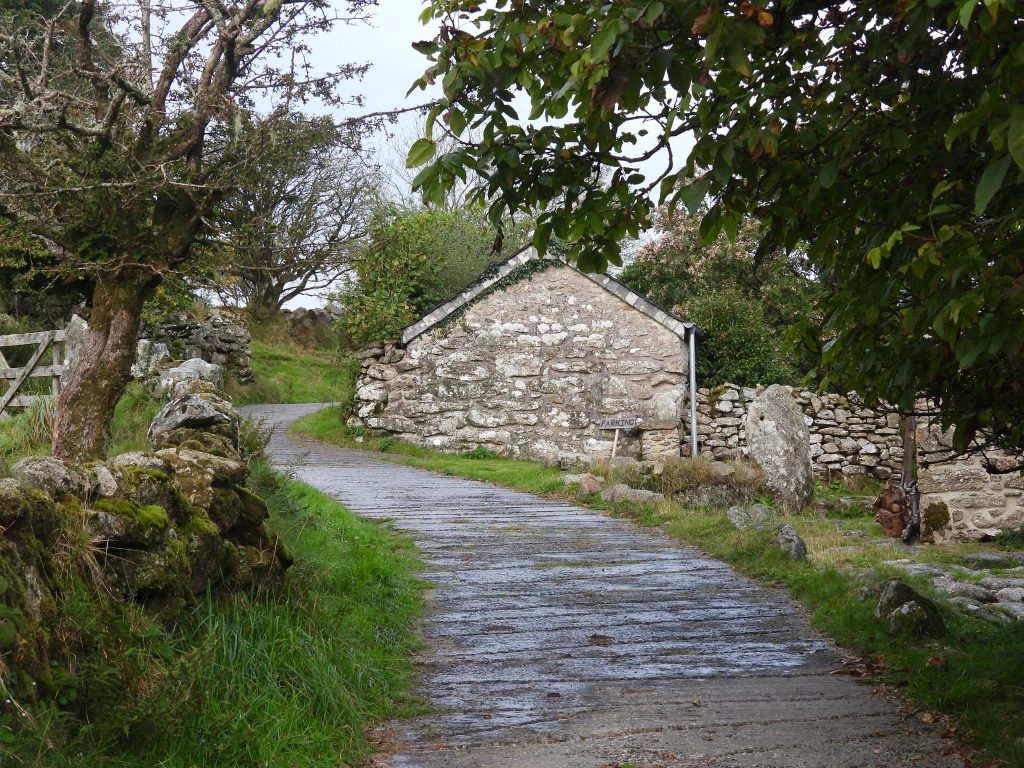
This annotated 19th century map shows the location of the Ash House at the western end of the main farm complex at CombestoneThis aerial view of the Ash House shows its rectangular shape and the fact it no longer has as roofApproaching Combestone Farm from the west along what the author believes is the old track from Hexworthy, around one mile away. There was also access to the farm was from the east along the ‘Cumpston Road’ from Holne and a track leading down to Dartmeet. The Ash House ruin can be seen behind the telegraph pole in the centre of the pictureThe Ash House still has gable end walls but is roofless. The doorway at the east end still has a lintel (October 2021). OS have described the ruin as being ‘7.2m. by 3.8m. internally with roughly dressed walling 0.5m. thick and 2.2m high’English Heritage in 2014 described the building as circa early C19 with ‘snecked’ dressed granite. Snecked masonry is a stone laying technique which mixes various shaped stones; squares, large rectangles, flat rectangles, and smaller fillers called “snecks”.At the western gable end there is evidence of there once being a hatch, which is where the ashes would have been placed. This side faces the lane. The lower ‘door’ side faces the fields looking down the Dart Valley. Below the Ash House are two buildings, which although look modern appear on the 19th century map of the farm. The roof’s look new alongside the satellite dishClose up of the Ash House. There is scant (historical) documentary evidence recorded about the Ash House. Tom Greeves / Elisabeth Stanbrook in their report of Combestone Farm found a document which recorded the that in 1885 Sir Henry Bourchier Wrey decided to put the Holne Chase Estate up for sale. The Greeves / Stanbrook report states: “The auction, which took place at 2pm on 9th June 1885, was conducted by Messrs Driver & Co at Lothbury in London. In the document, Combestone Farmhouse was described as being ‘Stone-built and Thatched, and contains Kitchen, Parlour, Dairy, Wash House and Lumber Place, and three Bed Rooms over; Garden and Ash House at Rear’. This is the first and only mention of the ash house”.This view of the Ash House shows where the main ‘nightly’ access was obtained to empty ash and hot embers into the building through the hatchThe farmhouse – its roof was replaced circa 1988Combestone Farm with its unusual name sign on the sloping slate roof. The Barn (assume the one in the picture) was re-roofed in 1993Gateway towards east end of the farm buildingsMore farm buildingsLeaving Combestone Farm via ‘Cumpston Road’ to the east