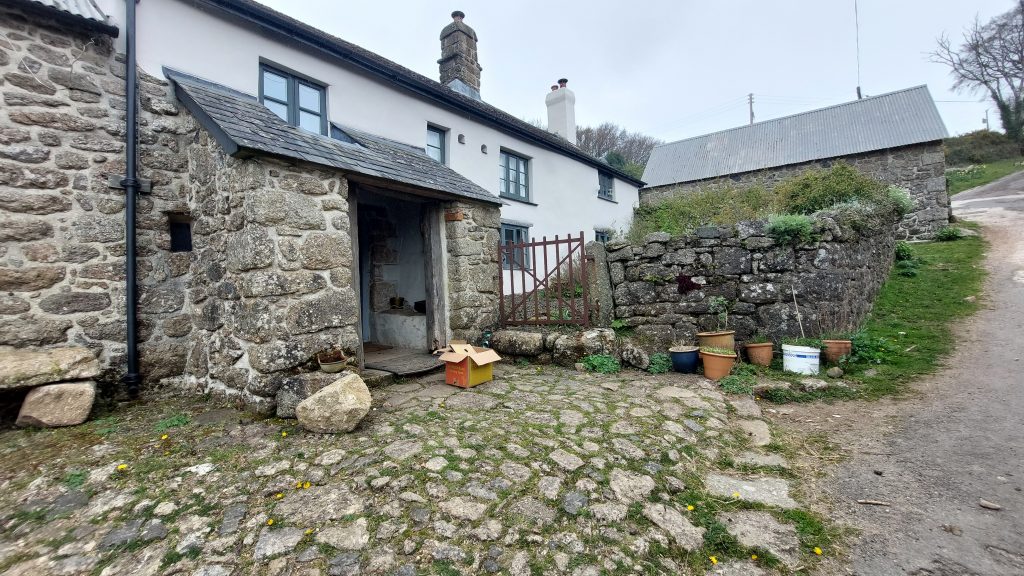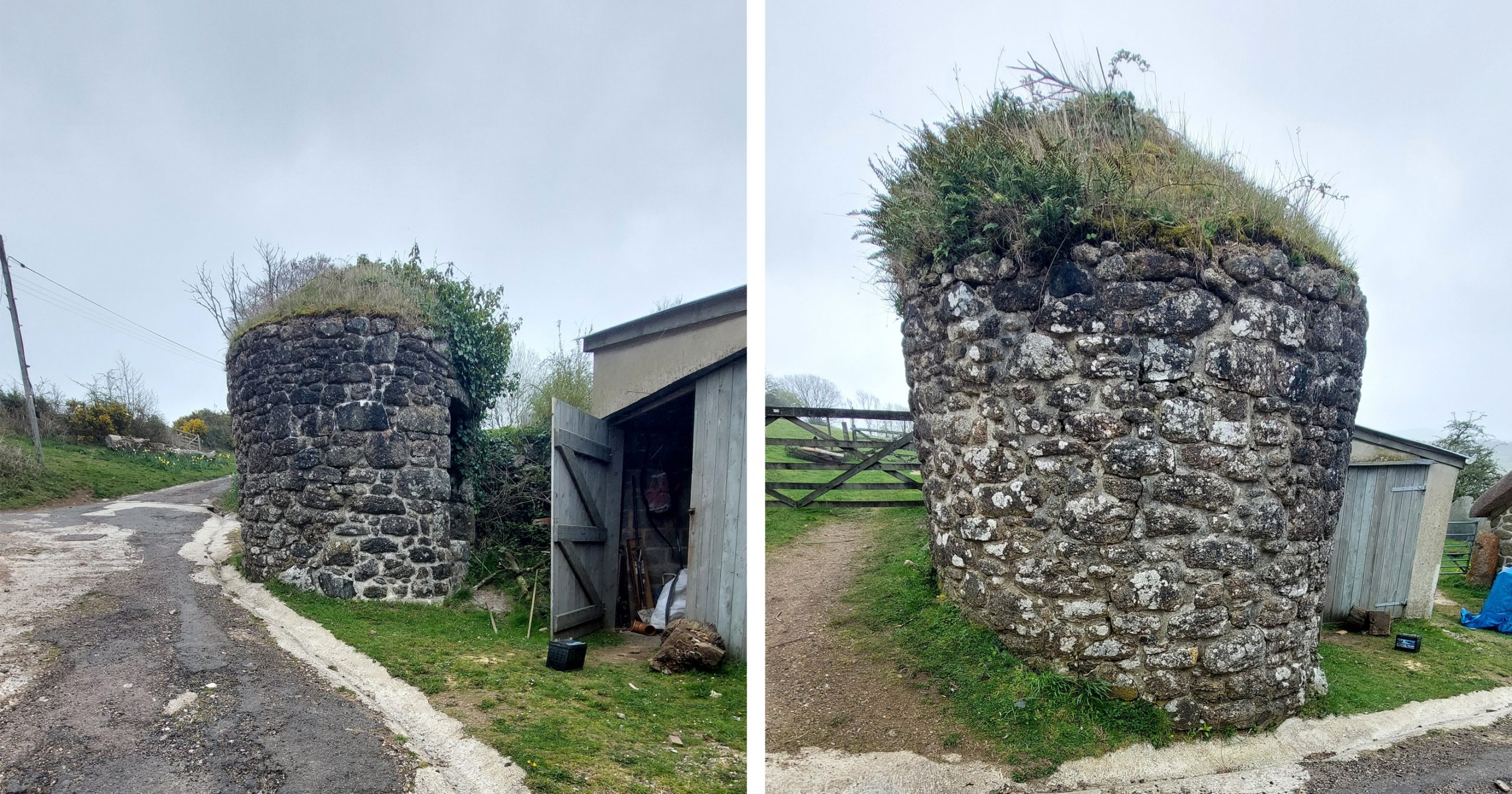
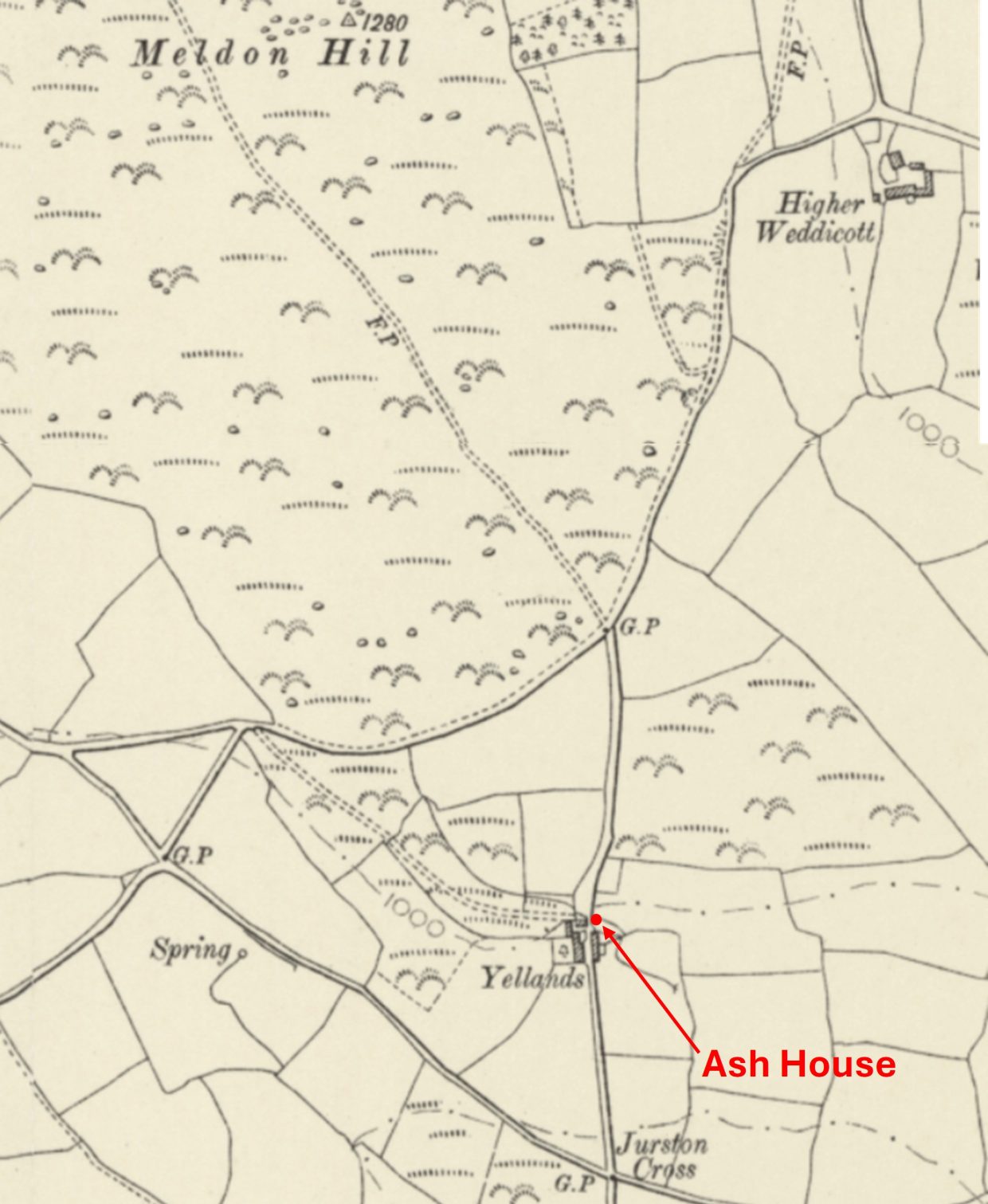
Ash Houses on farms in the north eastern quarter of Dartmoor were once common sight. They were constructed to store unattended ash and embers taken from open fires, a task* performed before going to bed, to reduce the risk of embers causing a risk to the thatched building during the night. With open fires, wide chimneys and thatched roofs fire hazards were ever present. Ash Houses were always located well away from the main farmhouse.
The accumulated ash would eventually be spread on the land with it being mixed with waste from the kitchen. It is thought that the ash house tradition could possibly date back to the medieval period, albeit there are examples in Devon which may have originated in the 13th century.
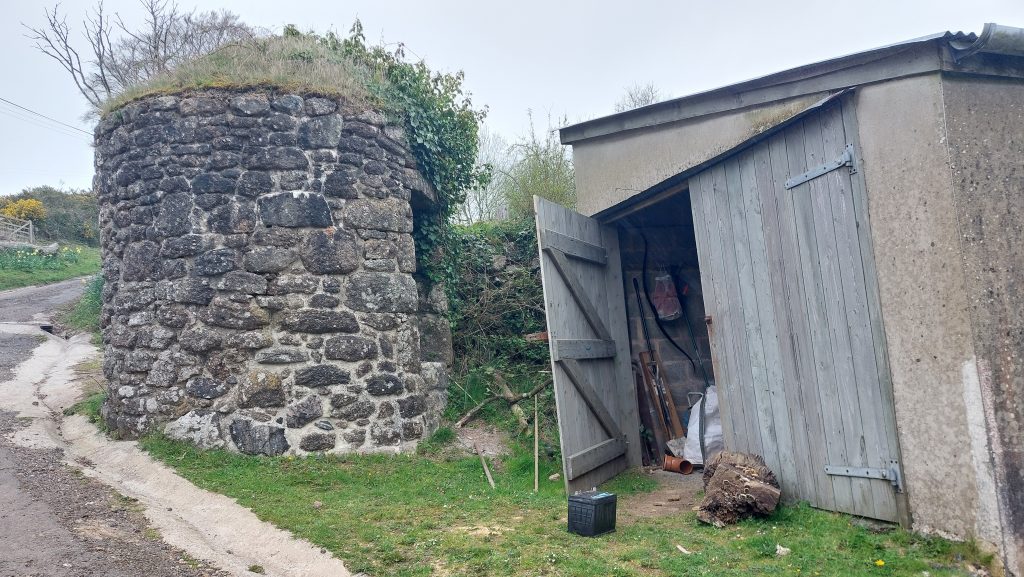
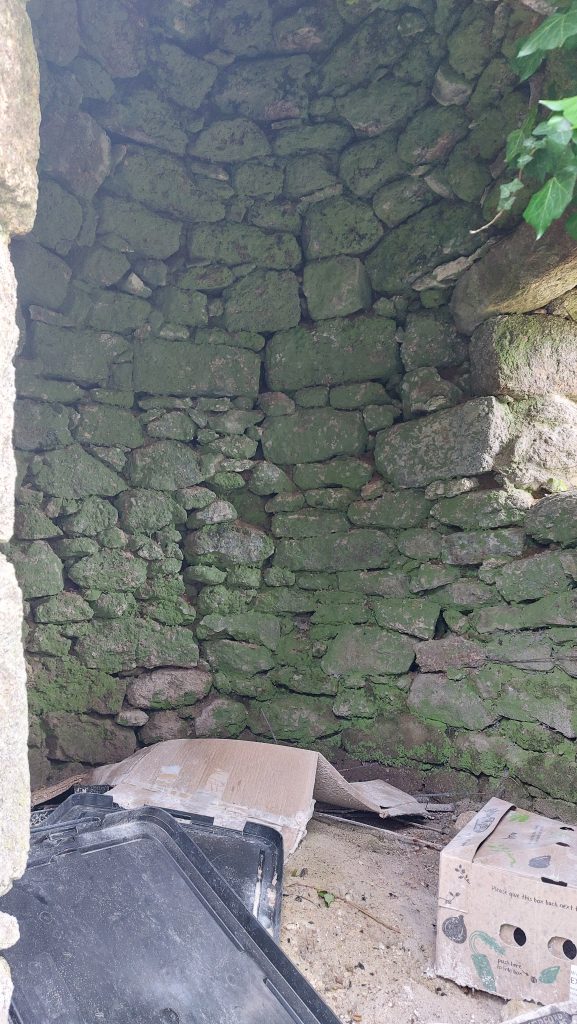
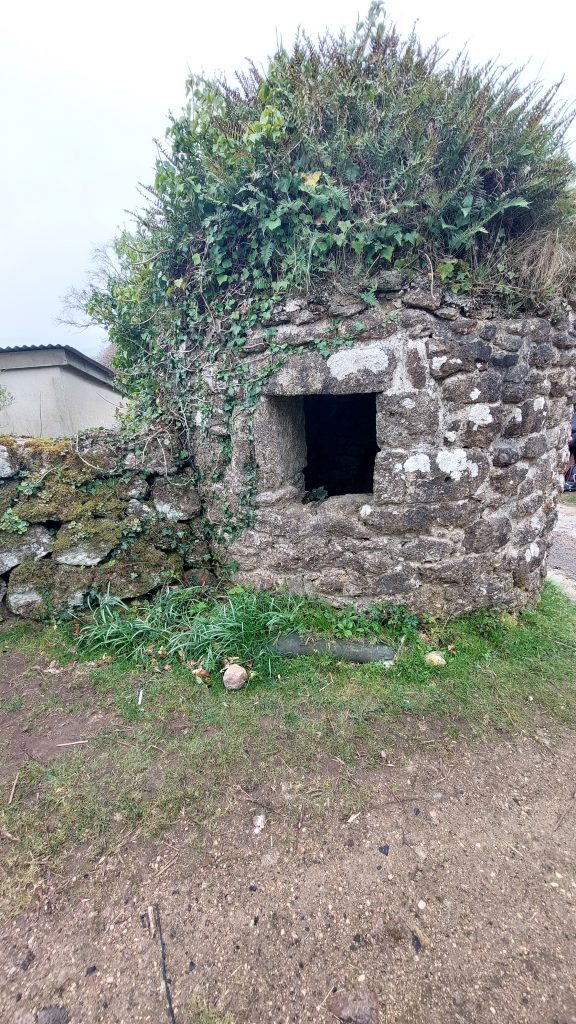
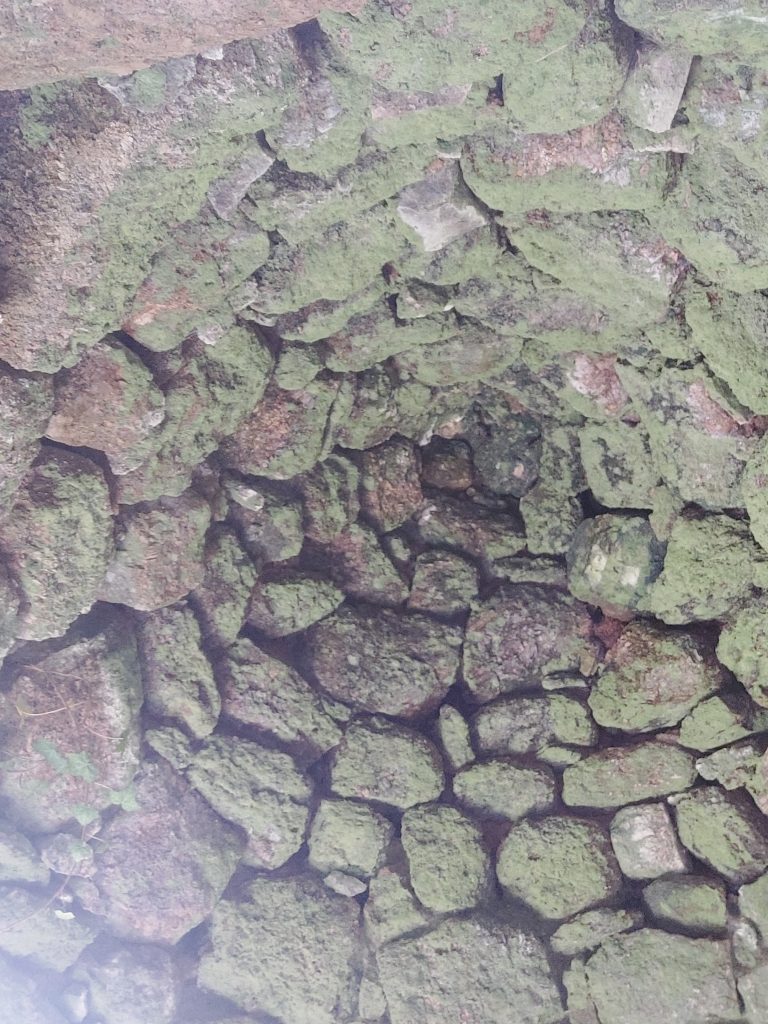
There are thought to be still around 30 Ash Houses in existence on Dartmoor, which survive in various conditions. The ‘classic’ Dartmoor Ash House is a small circular building with a conical roof, with an earthen or lime-washed floor. The design of the Ash House included a small hatch on the farm-side in which the ashes were dumped, with on the opposite side a doorway through which the ashes would be removed. In Worth’s Dartmoor, page 415 (figure 120) records a section plan of the Ash House from Lower Hisley, Lustleigh which he sketched in 1939.
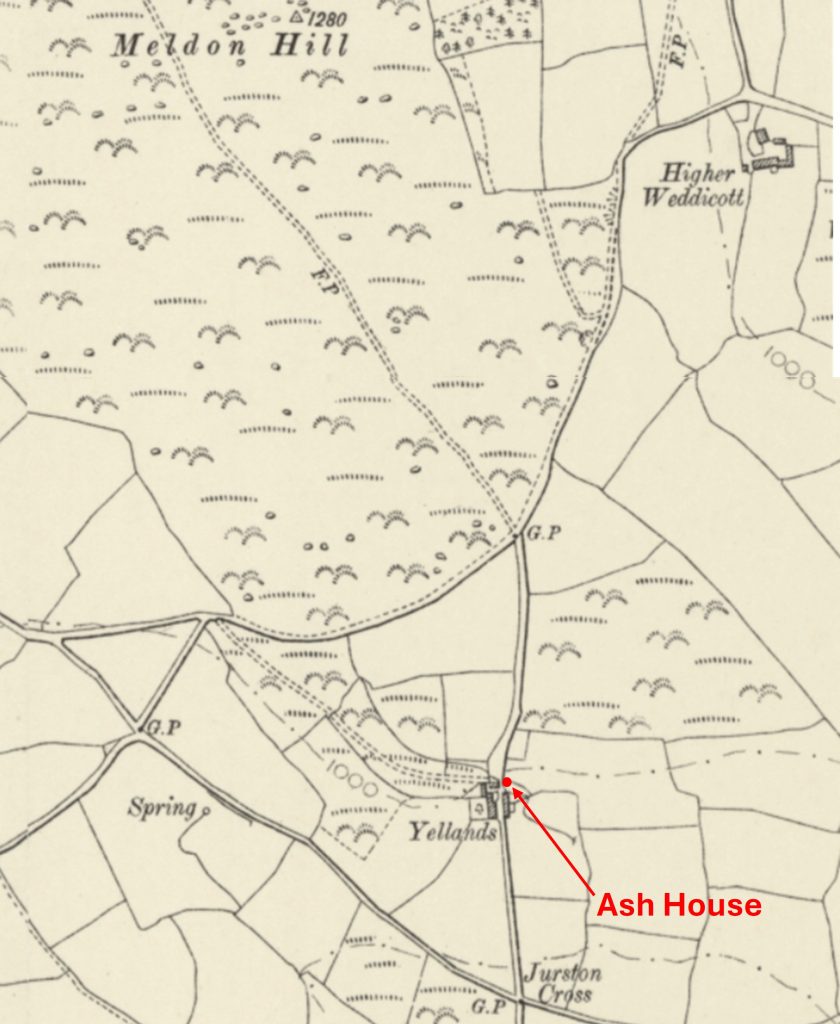
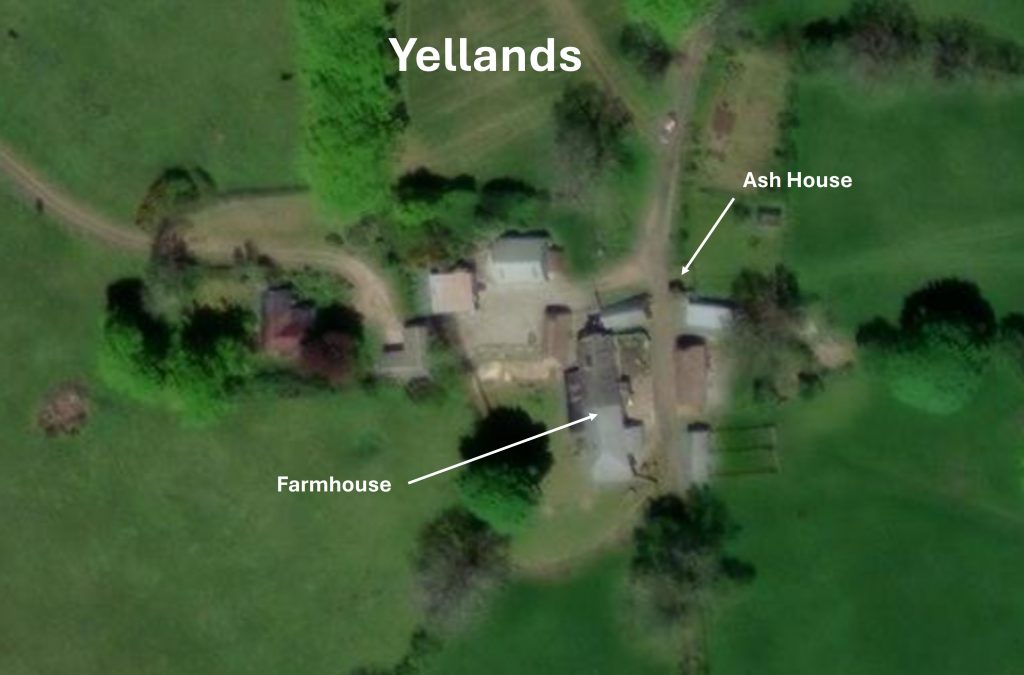
There are other styles of Ash House which are square which were built in the same manner only there was only a single door through which the ash was tipped and removed. The Ash House at Yellands farm, located south of Meldon Hill near Chagford has a classic ‘circular building with conical roof’.
*R. Hansford Worth (Worth’s DARTMOOR, page 416) records a conversation he had with a Mr Wills of Rudge, Lustleigh who told him that as a boy he had lived at the adjacent farm of Lower Hisley and it was part of his work to carry the ashes out every night. One assumes that there were many other cases where taking out the ashes was a chore which befell upon the children of the family.
Bibliography
- R. Hansford Worth – (1981) – Worth’s DARTMOOR (pages 416, 417)
- Department of Environment – (1987) – Chagford, 76 (List of Blds of Arch or Historic Interest). SDV350463
- Ordnance Survey Archaeology Division, – (1953/1974) -SX68NE1 (Ordnance Survey Archaeology Division Card). SDV274553.