Dartmoor Explorations

A collection of walks, discoveries, insights and pictures of exploring Dartmoor National Park

Possible Tin Mill site in post-Medieval Openworks adjacent to former Plym Consols Tin Mine

On the edge and near the bottom (south end) of a post Medieval Openworks adjacent to the former Plym Consols Tin Mine there is evidence of a possible Tin (Stamping) Mill in the form of a Double Mortar Stone.

This post is a photographic summary of the Openworks, the Double Mortar Stone at the location of the ‘possible’ Tin (Stamping) Mill and other features in the area such as an old shaft and a possible small enclosure / crude building

Bibliography

  1. The Tinworking Landscape of Dartmoor in a European Context – (2016) – Paper presented by Dr Tom Greeves – Lodges and Mills: The Field Archaeology of Tin Accommodation, Stamping and Smelting on Dartmoor at the conference (6th – 11th May 2016) at Tavistock – Mill number 113
  2. Dr. Phil Newman – (2006) – Cramber Tor Training Area Archaeological Field Investigation (Report – Survey). SDV233640.
  3. Dr. Phil Newman – (2007) – Cramber Tor Training Area Monument Baseline Condition Survey (Report – Survey). SDV348210.
0. Map
This annotated map shows the relative location of the Double Mortar Stone in relation to the openworks adjacent to the former Plym Consols Tin Mine. The map also shows its location relative to Newleycombe Lake and Newleycombe Farm
1. LiDAR
The LiDAR plot shows how extensive the Openworks are in relation to the surrounding land. It is west of Newleycombe Farm within the farm enclosures and no doubt had an impact on farming there
2. Openworks
Newman (2006) records this large linear openwork as being “oriented approximately SW to NE, cutting obliquely into the moderate slope of the valley side and is 190m long by 46m wide and approximately 15m deep”
3a. Shaft of edge of Openworks
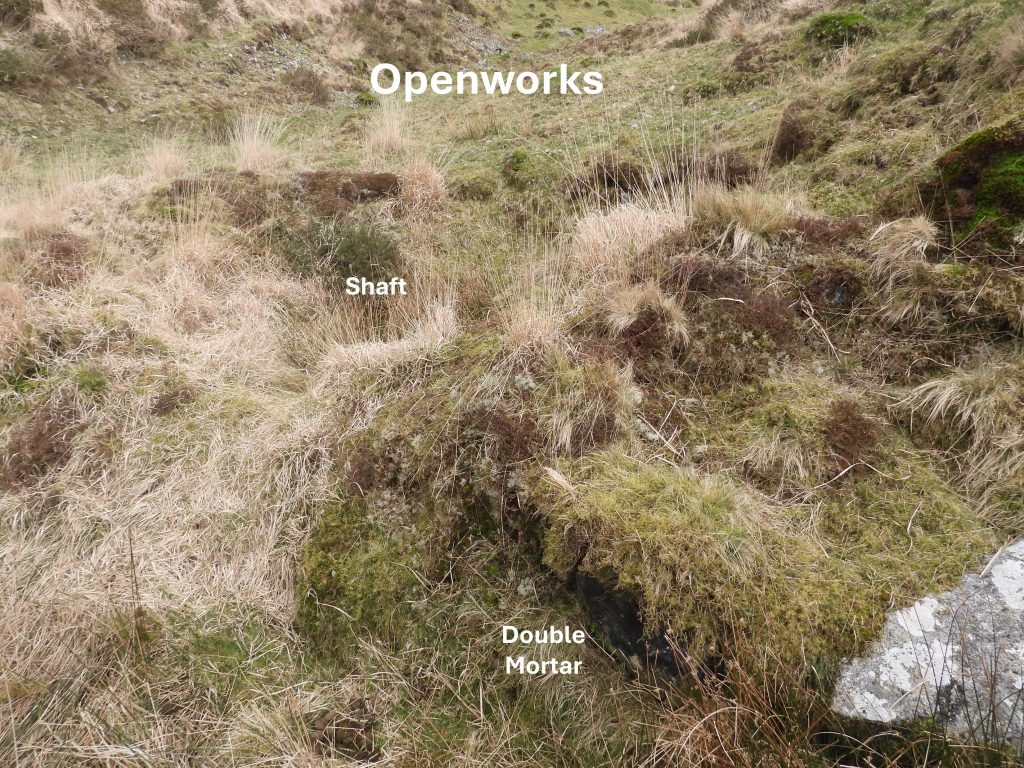
Near the bottom end of the open work on the east side is a Shaft at SX58579 69907. Just a few metres from this old shaft is the Double Mortar Stone.
3b. Shaft of edge of Openworks
The Shaft was probably part of Plym Consols Tin Mine which was operational in the 19th century. The mine appears largely undocumented and there is no known record of production.
4. Openworks Shafts Double Mortar
This photograph shows the location of the Double Mortar Stone which has been built into a bank just a few metres from the Shaft
5. Mortar Stone
The Double Mortar Stone maybe represent the site of possible Tin Mill dating from Medieval / late Medieval period. It is located at SX58578 69903
6. Openworks and Mortar Stone
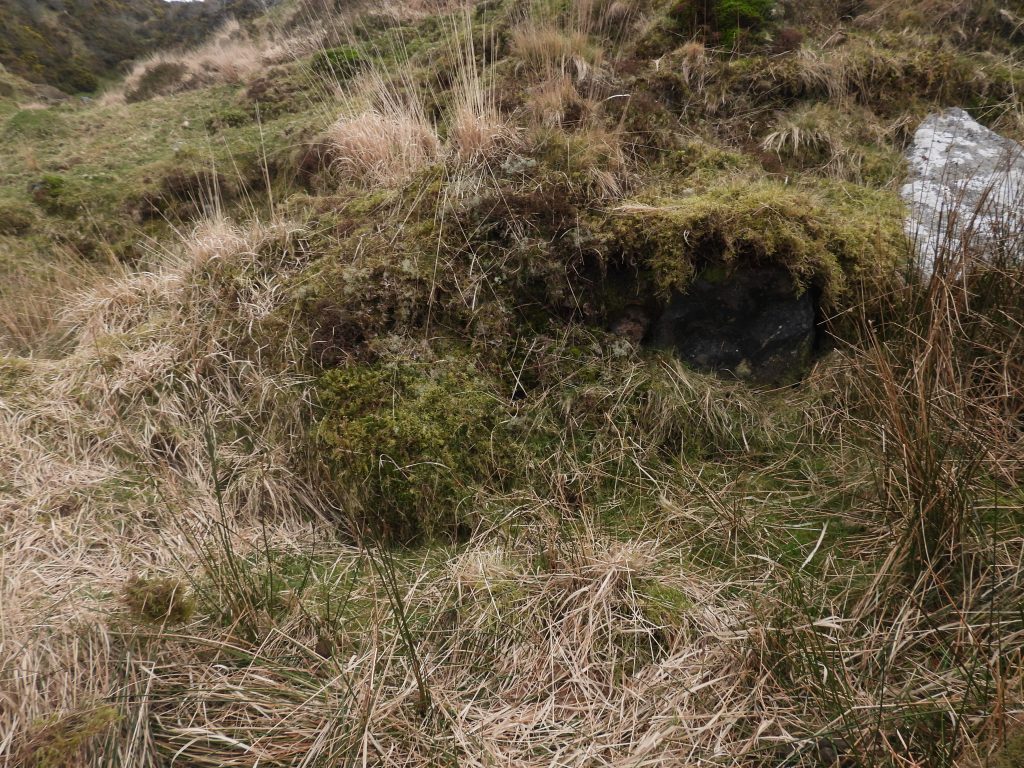
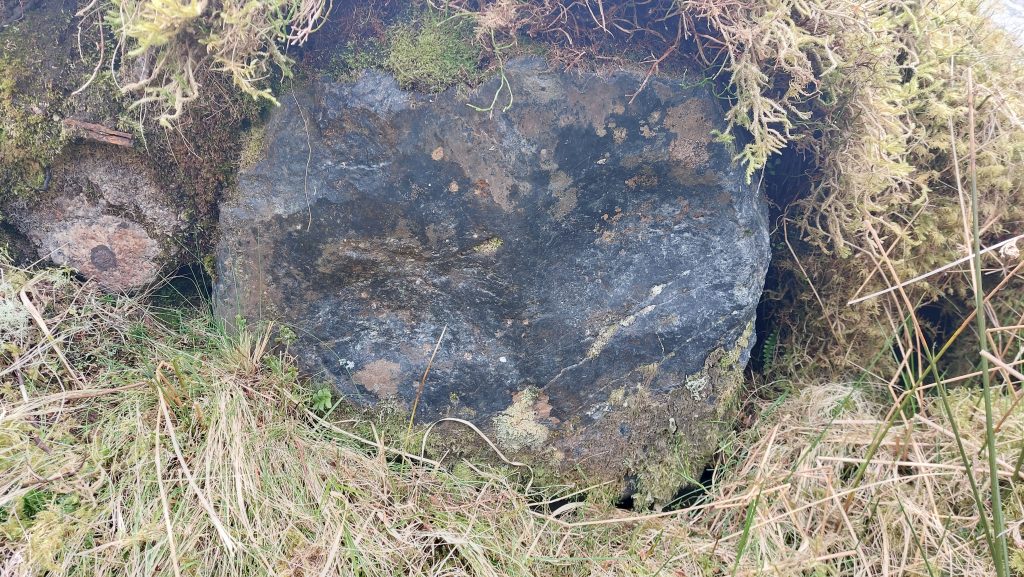
The Double Mortar Stone is partially hidden grass and moss
7. Mortar Stone
The Double Mortar Stone has shallow hollows which are 25cm between centres
8. Walling across Openworks
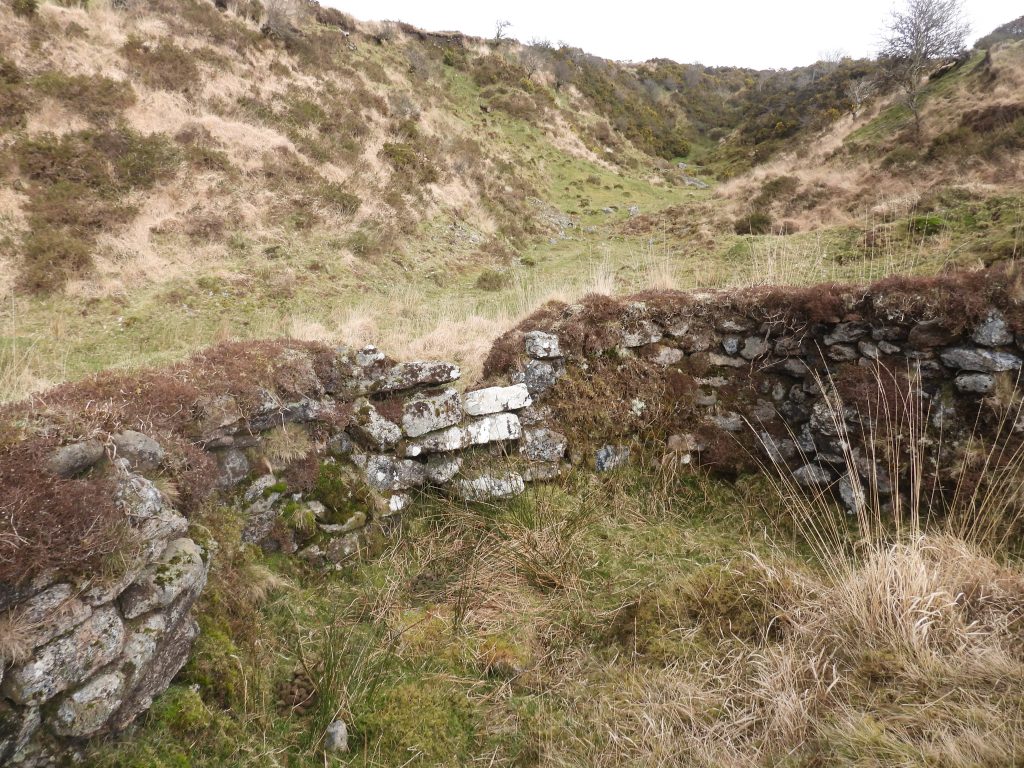
Drystone walling cross the bottom end of the openwork suggesting perhaps it was built after the Tinners had finished with their workings. There is a crude enclosure / building at the ‘kink’ in the wall as it ascends the east slopes of the openworks. In front (left) of this ‘kink’ is where the Double Mortar Stone is located
9. Shelter by Walling
At the ‘kink’ in the wall crossing the large openwork is an area which looks like it has been constructed into a small enclosure or possibly a crude building. Behind (to the north) of this structure is the location of the Double Mortar Stone
10. Shelter by Walling
The small enclosure / crude building is located at SX58571 69903
11. Between the Shelter and the Shaft
Another contextual view of the Double Mortar Stone and Shaft in relation to the Openwork. The author trimmed the grass / moss ‘fringe’ of the stone for the photograph
12. Mortar under Moss covered Bank
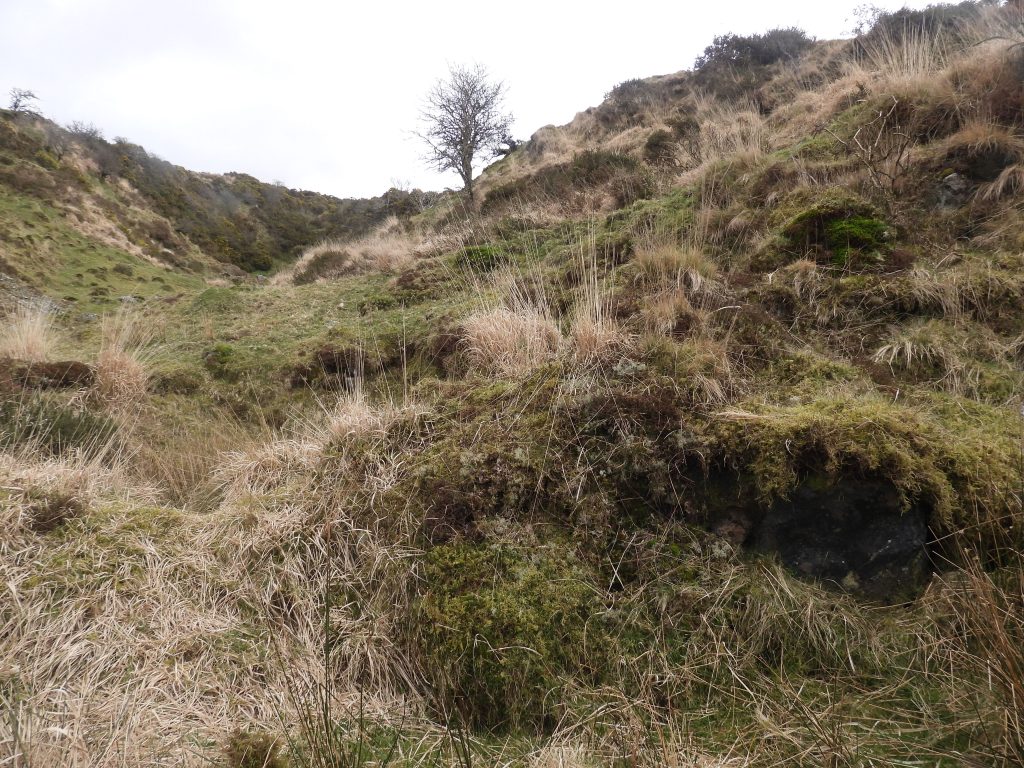
It is a mystery why the Mortar Stone was built into this bank. Potentially the Tin (Stamping) Mill was located here.
13. Contextual View
The Mortar Stone when viewed from alongside is certainly obscured and can easily be missed
14. Close up of Mortar Stone
Newman (2006) records the Mortar Stone hollows as having “approximate diameters 18cm and the depth is 2.5cm”
Total Page Visits: 102 - Today Page Visits: 56

Next Post

Leave a Reply

© 2026 Dartmoor Explorations

Theme by Anders Norén

Social media & sharing icons powered by UltimatelySocial