A collection of walks, discoveries, insights and pictures of exploring Dartmoor National Park
December 13, 2025
Tavistock’s secret Medieval gem – a beautiful Abbey Porch
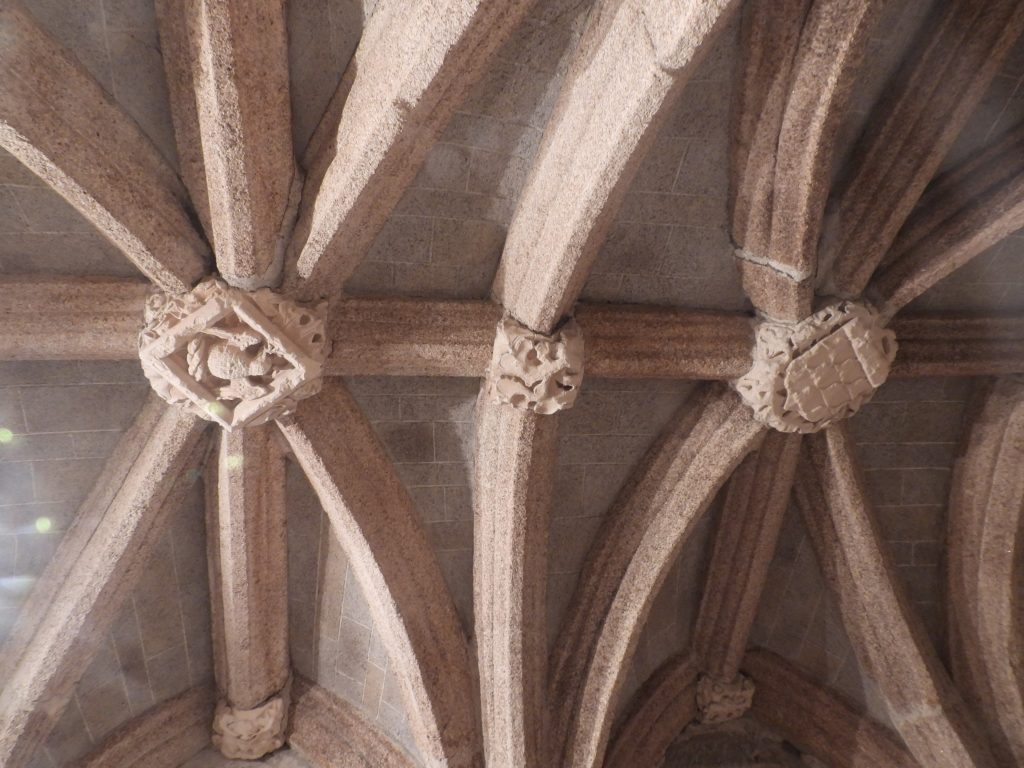
If you walk from Abbey Bridge along Abbey Place towards Bedford Square, on your left (to the south west), just past the Post Office and set back from the road is a little known gem of Tavistock’s medieval past, a beautiful Abbey Porch. It was once the access to what is now the Abbey Chapel, but formerly was access to when the building was known as Misericord (or Infirmary Dining Hall) of the Abbey. The Abbey Porch has beautifully carved bosses on the groins of the vaulted ceiling which are generally considered to commemorate a quarrel between Richard Banham, Abbot of Tavistock 1492 to 1523, and Hugh Oldham, Bishop of Exeter 1504 to 1519. It is an intriguing story !
The porch is not open to the public without permission and special access which can be gained via an organised guided walk or on Heritage Open Days. The author has been fortunate enough to have gained access though Simon Dell (on two occasions) and would concur with Simon’s description that “it must be the jewel in the crown of Tavistock Abbey”.
The post has been possible due to the tenacious research conducted by Simon, gratefully received by the author. Simon’s passion is compelling and as he puts it: “If only its walls could speak – they would tell an extraordinary story”. Here is that story…….
Bibliography
Simon Dell MBE – unpublished paper titled – ‘Roof Boss Article’
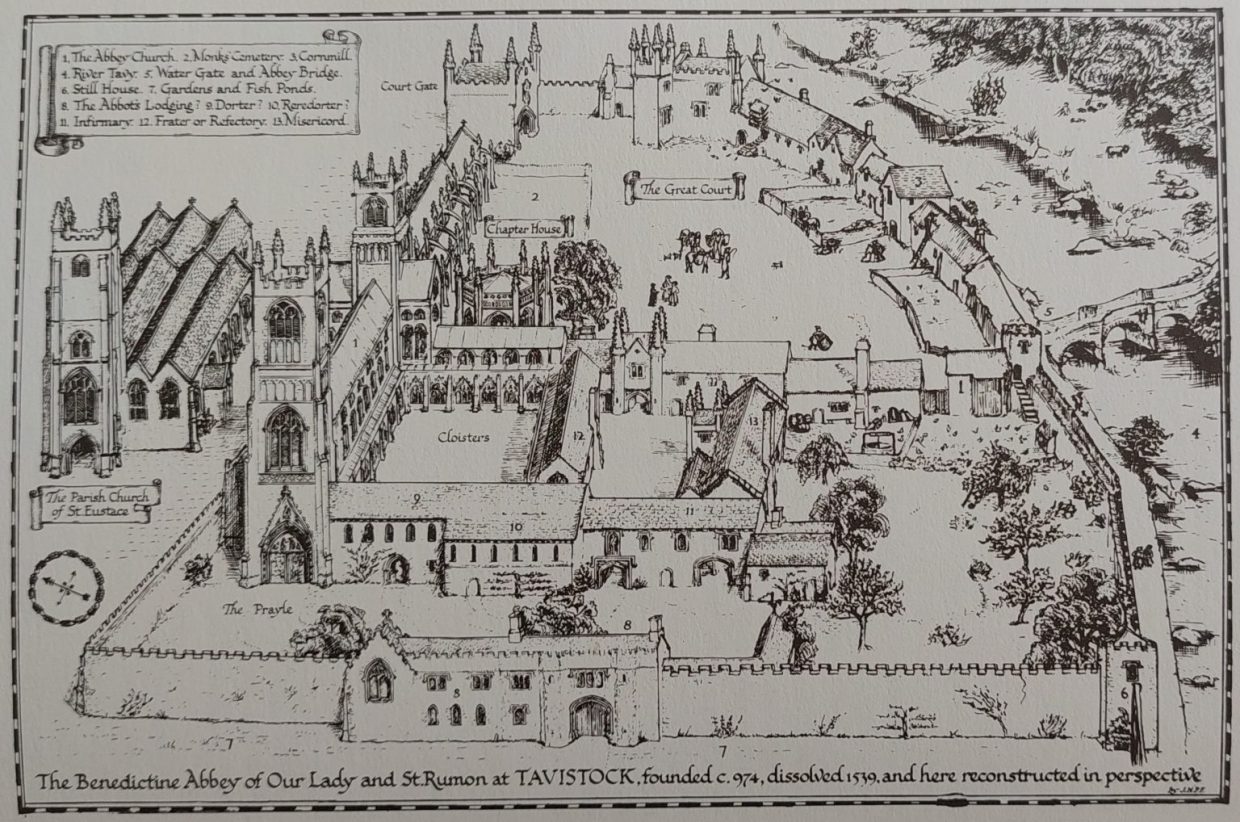
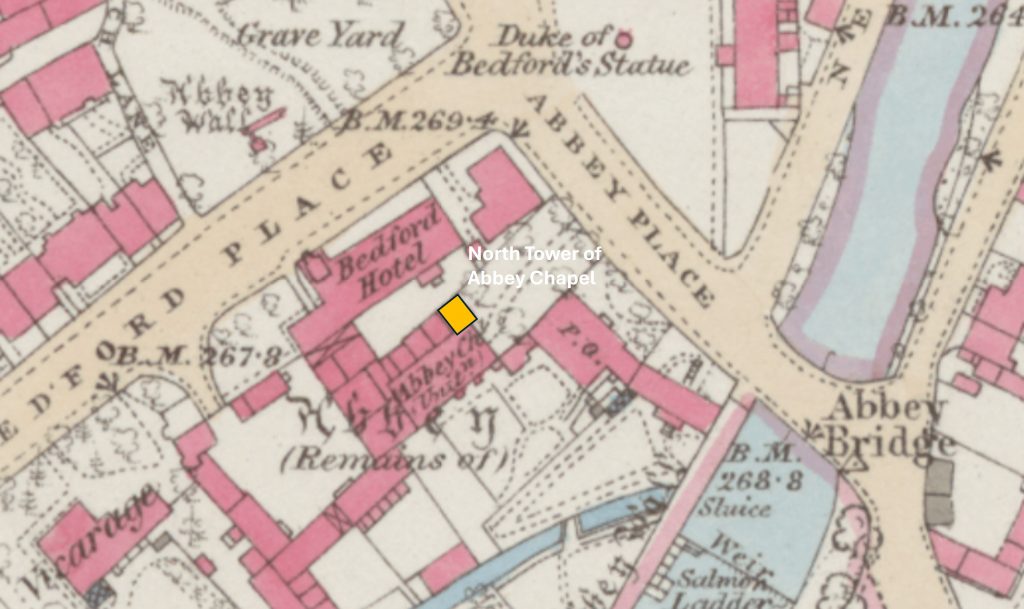
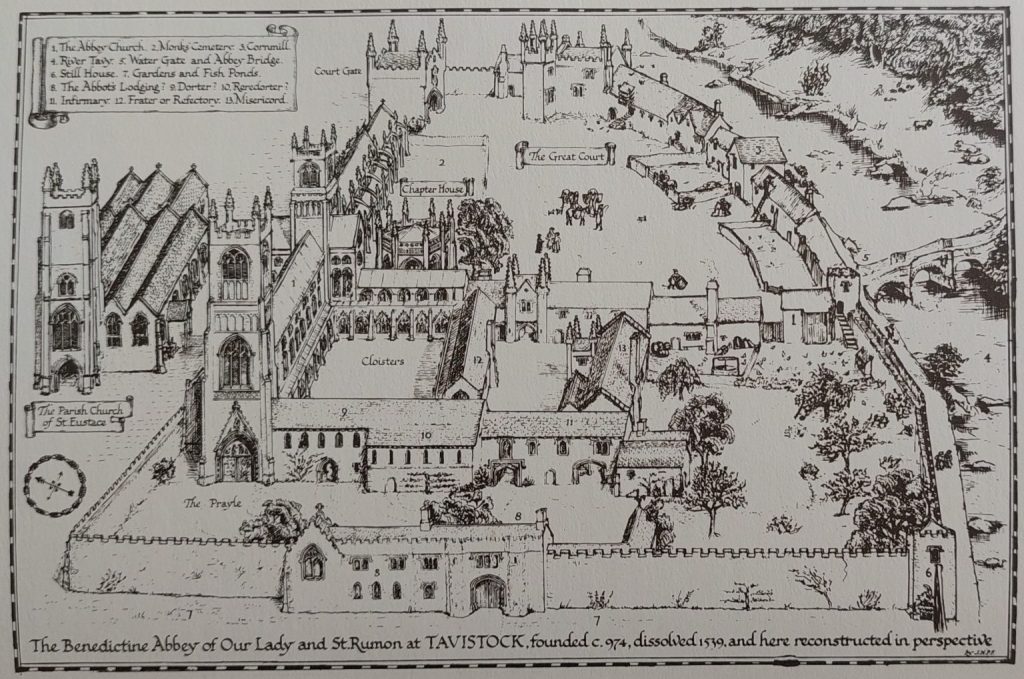
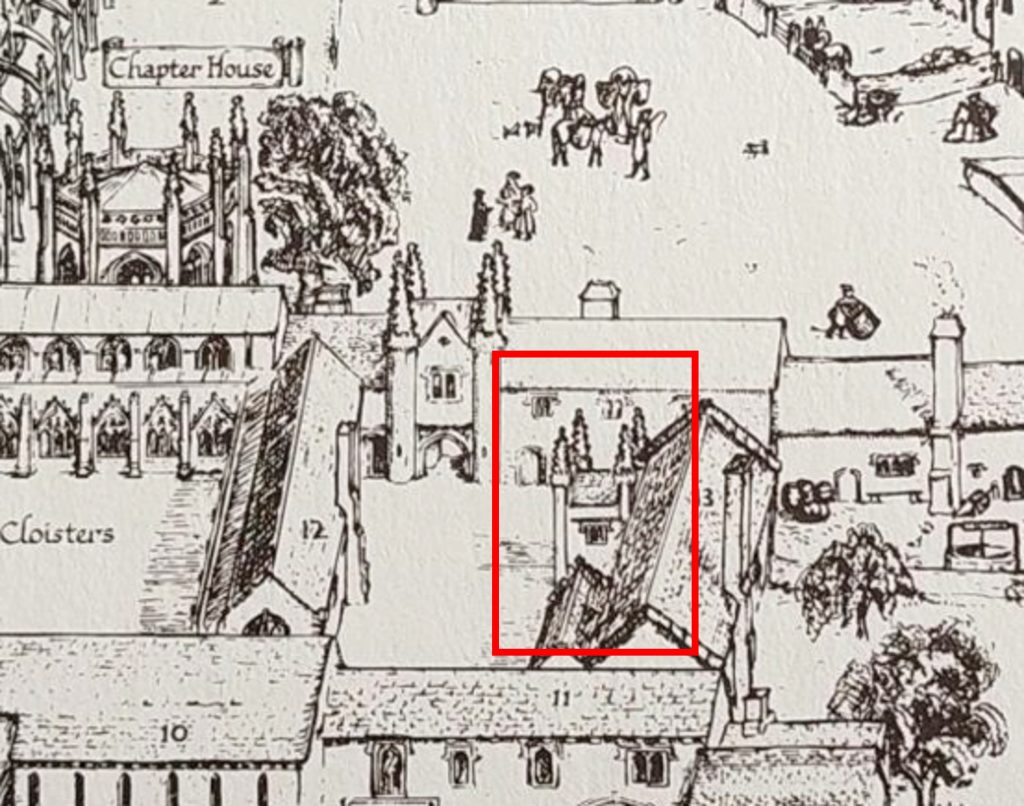
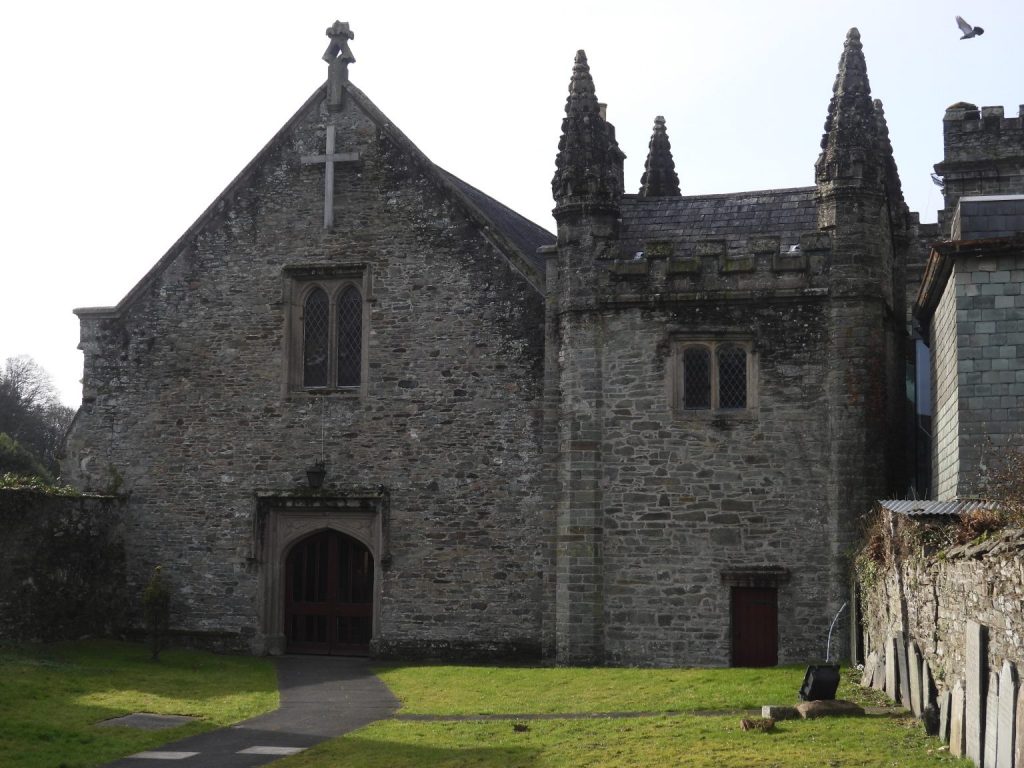
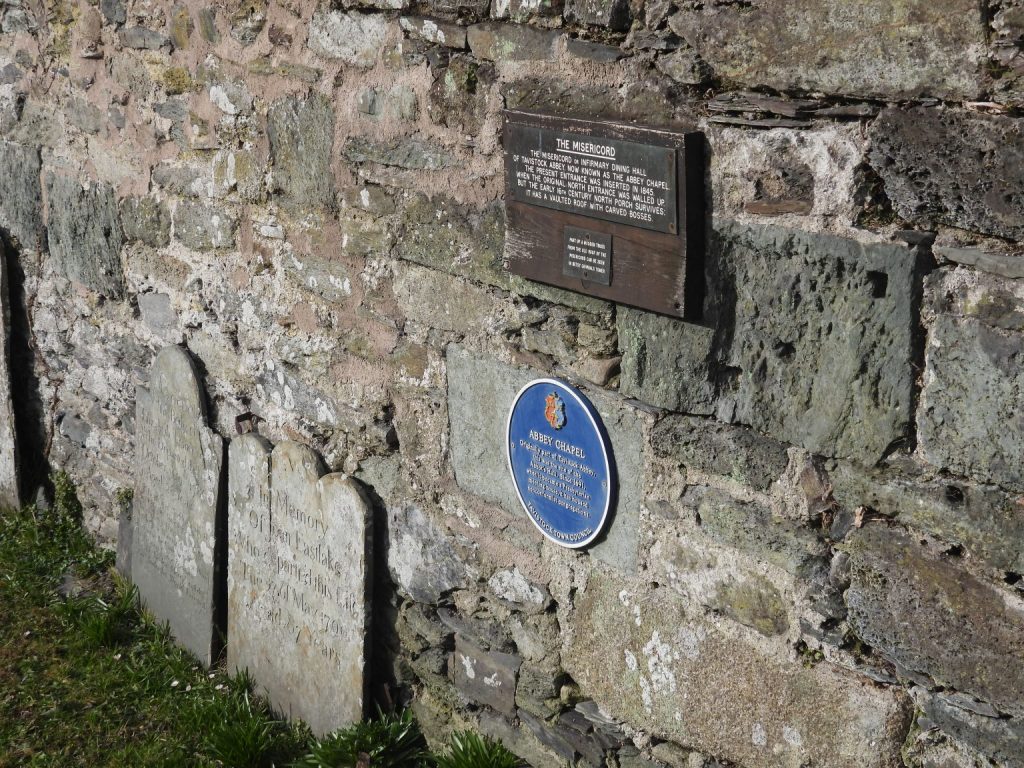
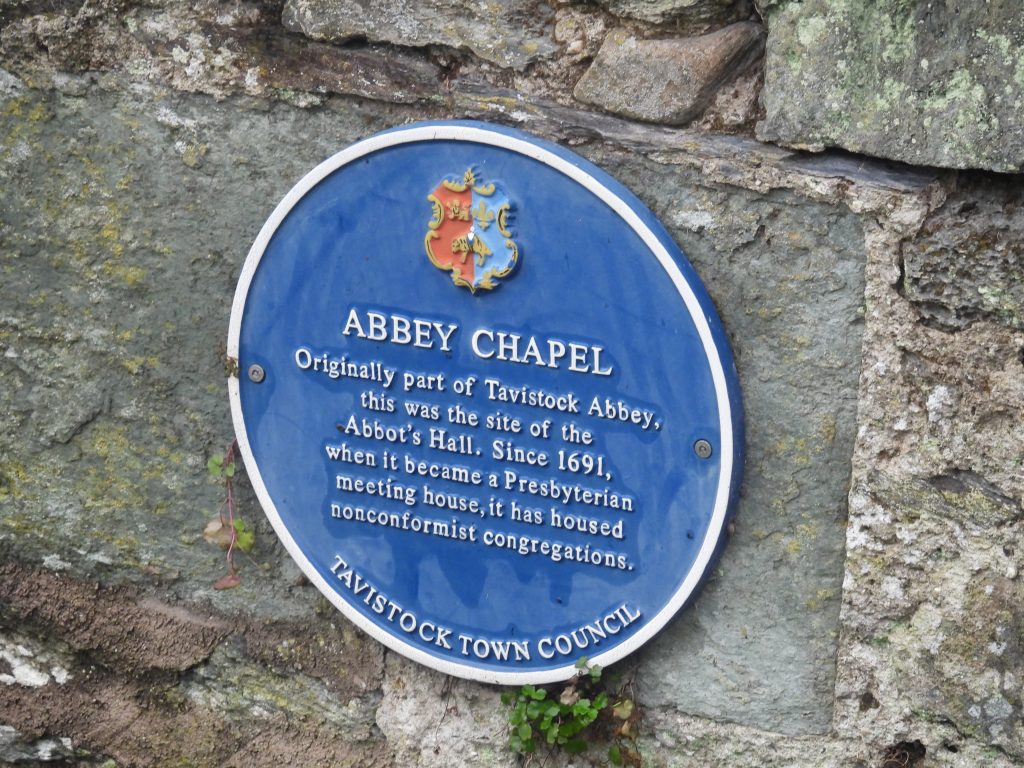
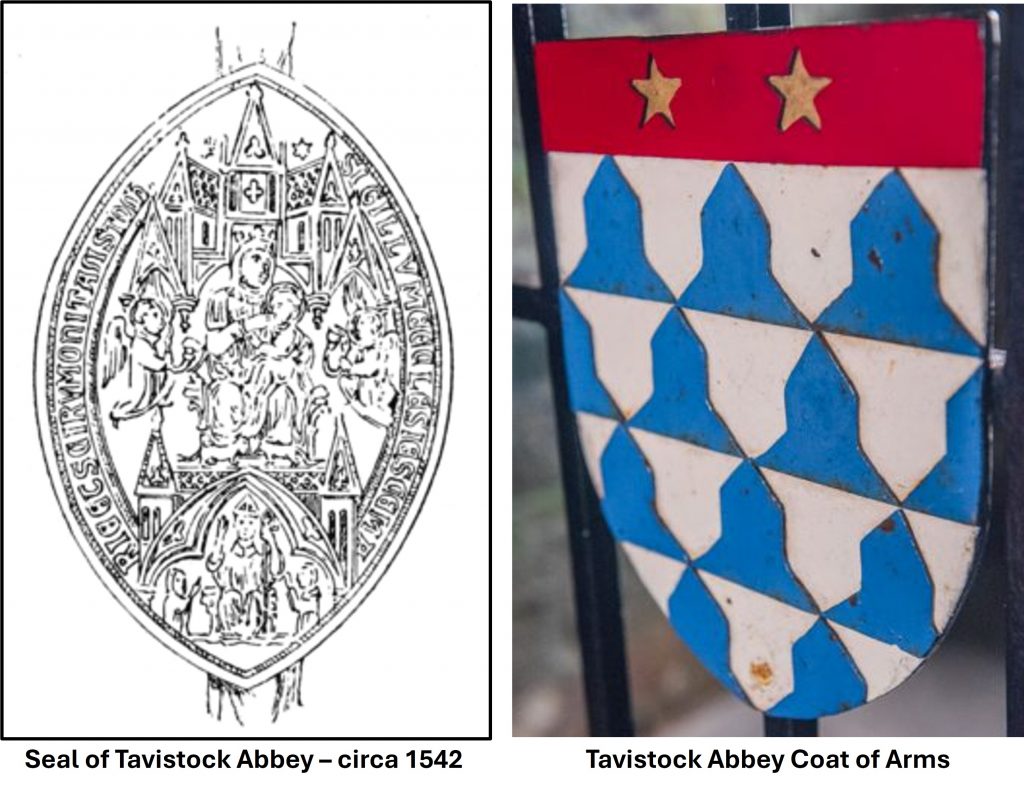
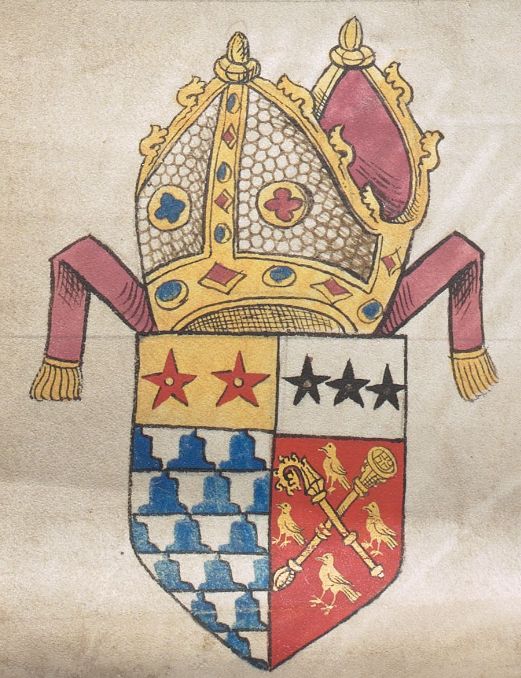
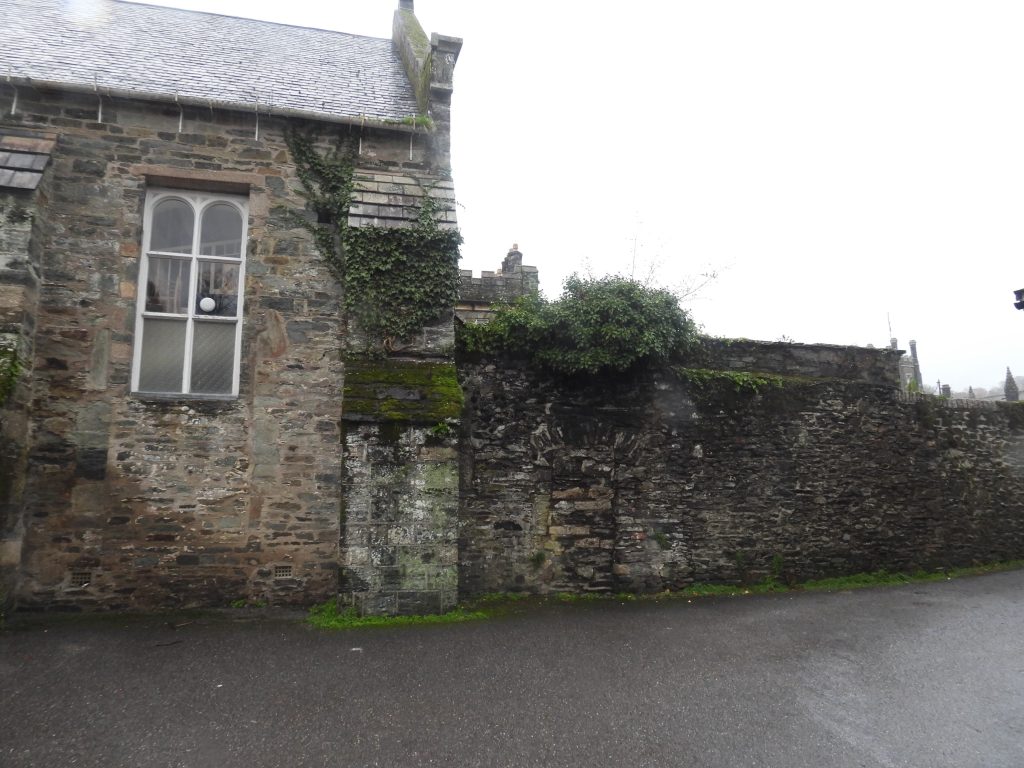
This annotated 19th century map, shows the location of the North Tower (or Porch) of the Abbey Chapel. It is set back from Abbey Place and behind Bedford Hotel so is easily missed. This map depicts a vastly different scene from what would have been here 300 years earlierTavistock’s Bendedictine Abbey must have been quite an impressive sight. Today, not much is immediately recognisable from this picture. However, on closer inspection the observant will find: Court Gate, Trowte’s Tower, south precinct wall, Still Tower, Betsy Grimbal’s Tower, small remnants of cloisters, Abbey Bridge, St. Eustace parish church, the Abbey Chapel and its entrance tower (porch). Brief History of the Abbey: Some historians believe Tavistock Abbey was founded in 961 by Ordgar, Ealdorman of Devon, but the general modern consensus is that it was wholly the foundation of his son Ordwulf in 974. The abbey church (between St. Eustace Church and where the Bedford Hotel now stands), was destroyed by Danish raiders in 997 and rebuilt under Lyfing, the second abbot. The church was further rebuilt in 1285 and the greater part of the abbey between 1457 and 1458. However, on 3rd March 1539 the last abbot, John Peryn, together with twenty monks, surrendered the Abbey to the King as part of the dissolution of the monasteries. They were granted a pension of a hundred pounds. This obviously led to the destruction of what must have been magnificent buildings. There is some rather impressive AI interpretations of the Abbey by Dan Massey which can be found here: https://www.facebook.com/groups/TavistockParish/permalink/2833096586895804/This Tower (or Abbey Porch) is the main focus in this post. The 21st century view of the Tower (right) and the entrance to the Abbey Chapel (left). Before 1845 access to the Abbey Chapel was only through the Tower (Abbey Porch). As can be seen in the photograph this has been changed with an ornate entrance doorway. The ‘new’ doorway uses a re-cycled granite arch of the former water-gate entrance of the abbey which was inserted into the east wall of the Chapel to become the main entrance we use today. The access to the tower (Abbey Porch) is less ornate and was the result of a late 1960s ‘knock through’.These plaques tell the story of the Misericord which became the Abbey Chapel. The Misericord (or infirmary dining hall) was built as a dining hall for the sick. The monks had strict dietary rules which were relaxed for those who were unwell. Thus apparently lead to monks and others to dine more frequently here (with relaxed dietary rules), rather than in the refractory (ref: Johnie’s Meanderings)Blue plaque explaining some of the history of the Abbey ChapelThe seal of Tavistock Abbey is from a lease of 1542, just three years after the surrendering of the Abbey to the King as part of the dissolution of the monasteries. It shows St Mary with the infant Jesus seated on her lap, with a mitred abbot seated below, all surrounded by the legend: SIGILLUM ECCLESI(A)E S(AN)C(TA)E MARI(A)E ET S(AN)C(T)I RUMONI TAVISTOCK (“seal of the Church of Saint Mary and of Saint Rumon of Tavistock”). The coat of arms on the right from the Abbey can be found at Brent Tor church and will be seen later in this post on the vaulted ceiling of the Tower (Abbey Porch)The story of the Abbey Porch with its ‘vaulted ceiling and bosses’ begins in 1513 when Richard Banham, Abbot of Tavistock was working to become a Spiritual Lord of Parliament. This offended Hugh Oldham, the Bishop of Exeter and by April that year, the Abbot had been summoned to answer for his contempt. However, his answer was found to be unsatisfactory and the Bishop excommunicated him the following week. The picture is the Banham coat of arms
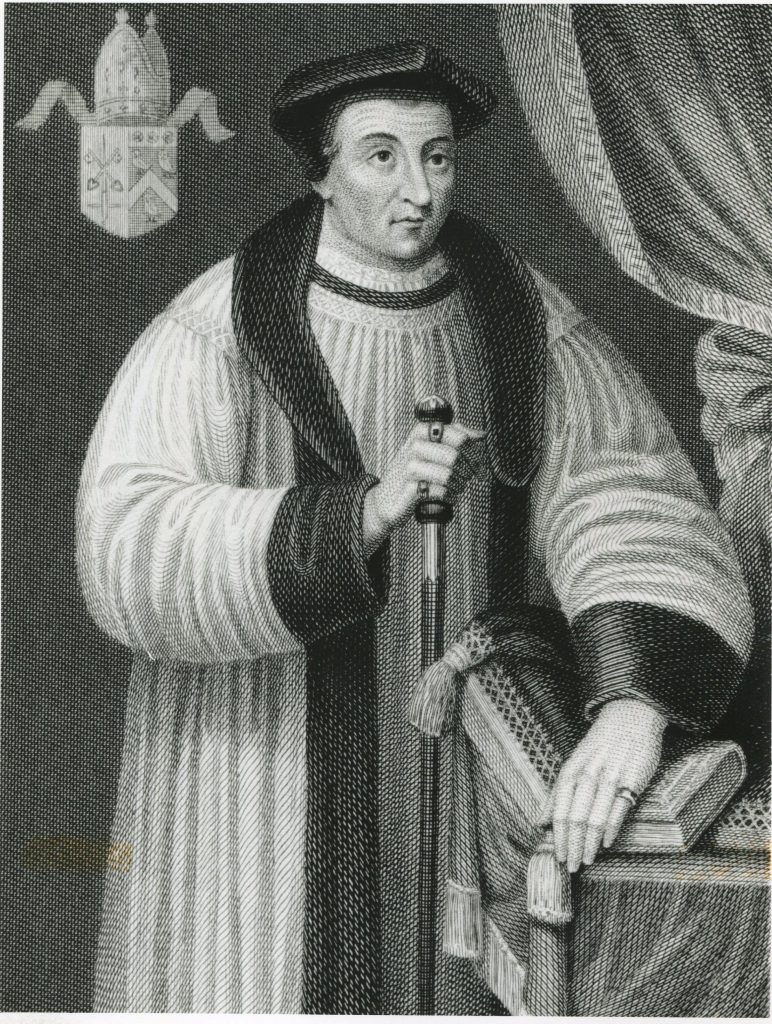
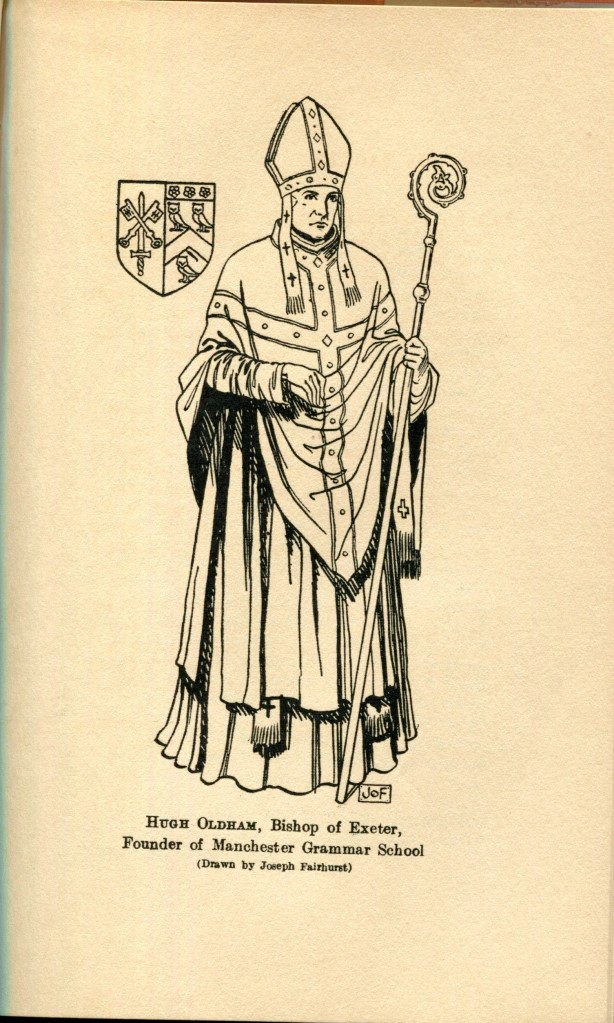
The picture above is of Hugh Oldham, the Bishop of Exeter. After he had been offended by Richard Banham, on 10th May 1513, at Exeter, the Abbot was obliged to kneel before the Bishop, to ask forgiveness, to take an oath of submission.
Abbot Richard Banham appealed, but both the Archbishop of Canterbury and the Bishop of London rejected his plea. Ironically, the final judgement was given on 8th February 1514, only three weeks after the King had actually appointed Banham to the House of Lords!
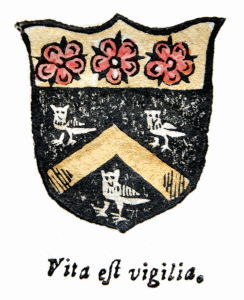
The story takes a further twist. Still convinced that he was in the right, the Abbot appealed to the Pope and this was confirmed by the King in 1519, so leaving Richard Banham victorious. Hugh Oldham himself was then excommunicated by the Pope! Karma indeed. The coat of arms and motto is Hugh Oldham’s – Vita est Viglia perhaps translates as ‘Life is Vigilance’ (perhaps given the story, this is rather amusing)
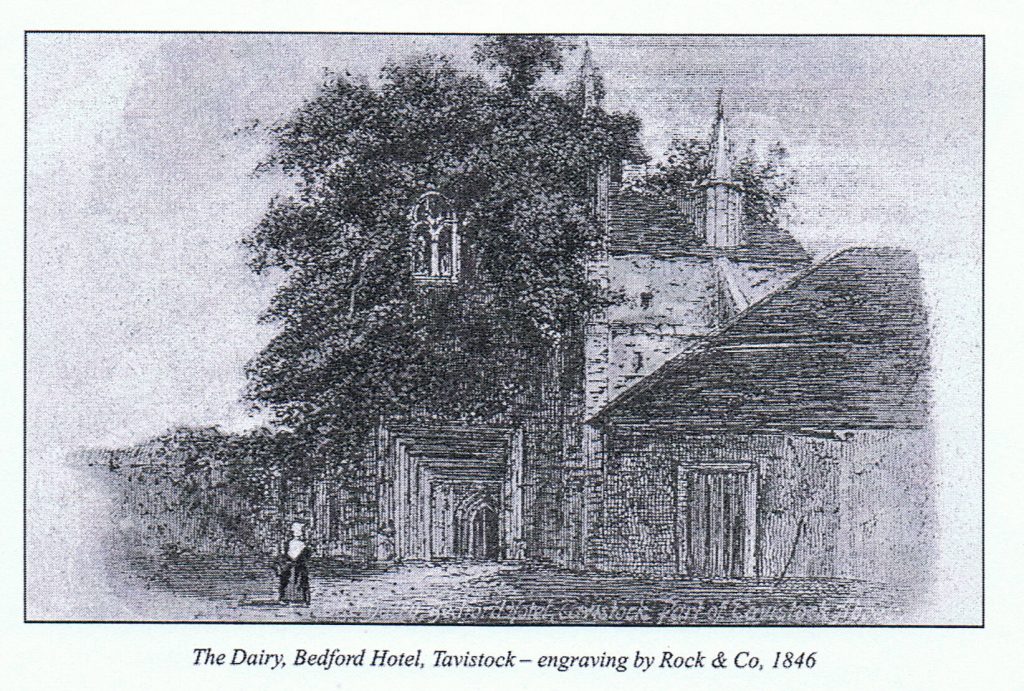
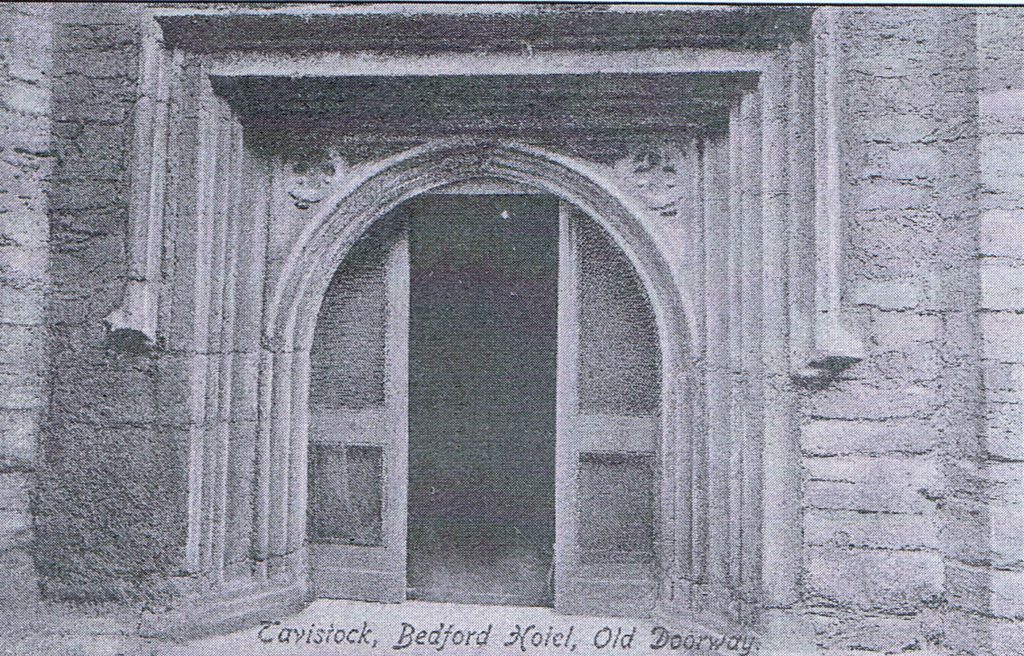
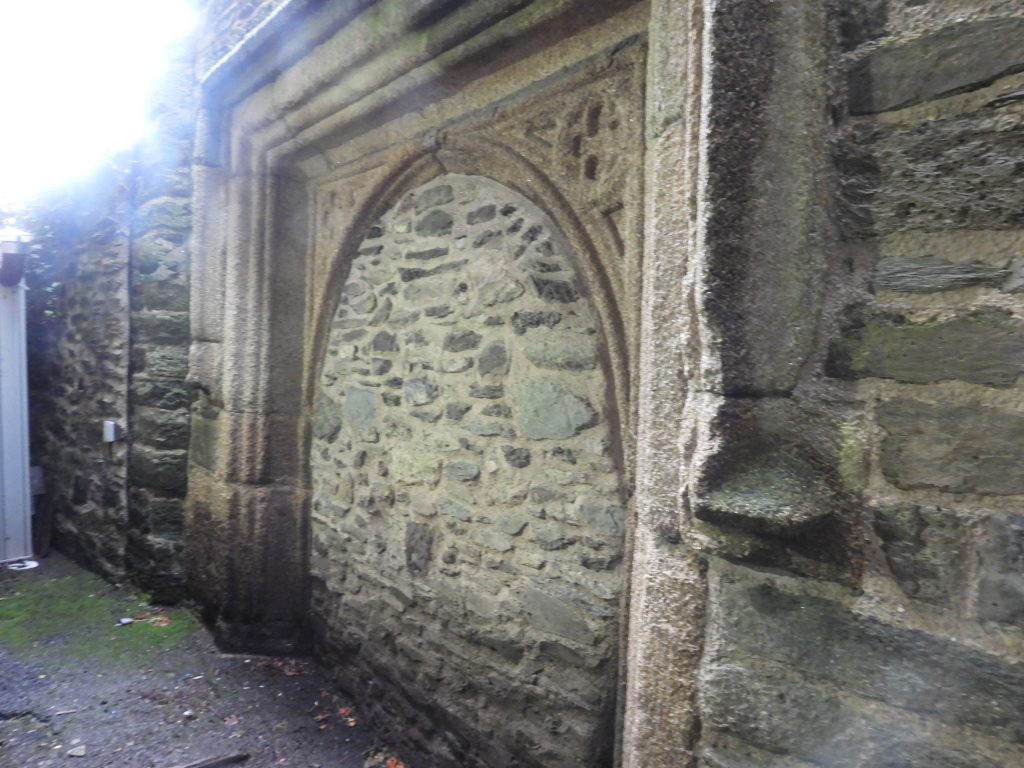
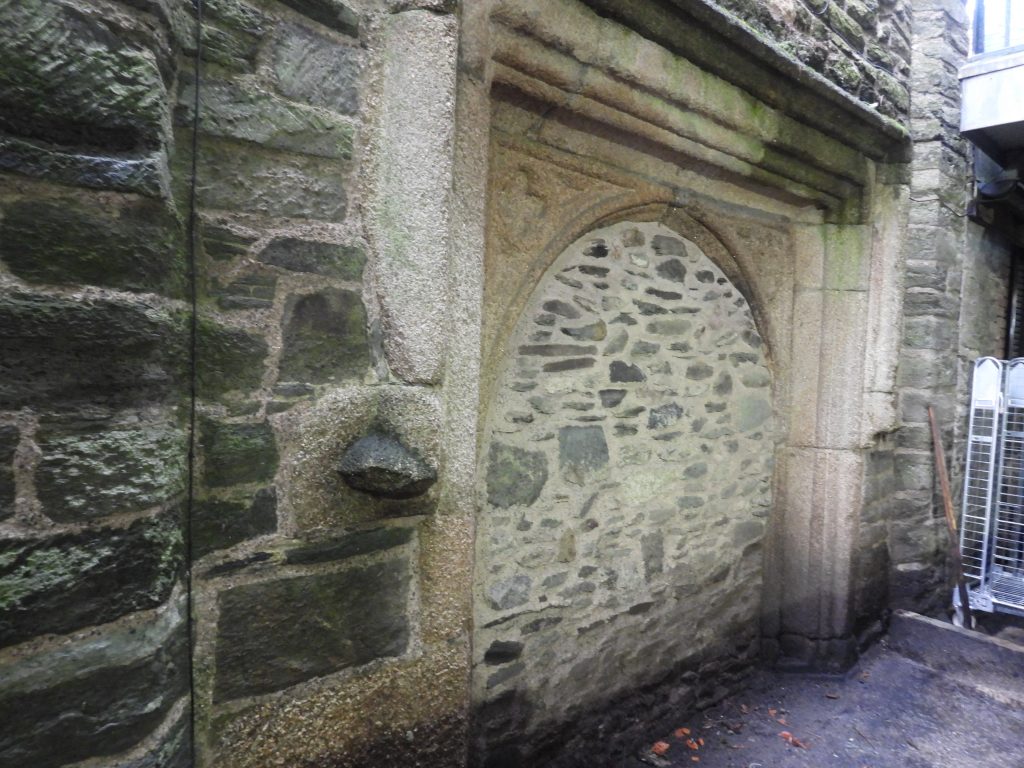
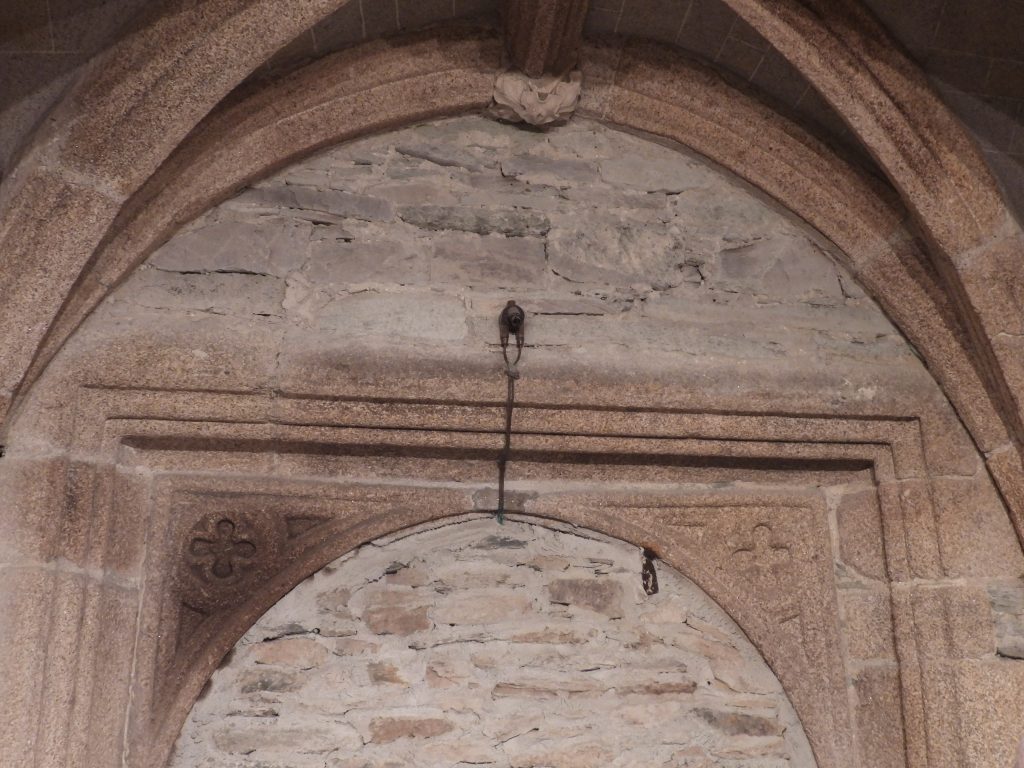
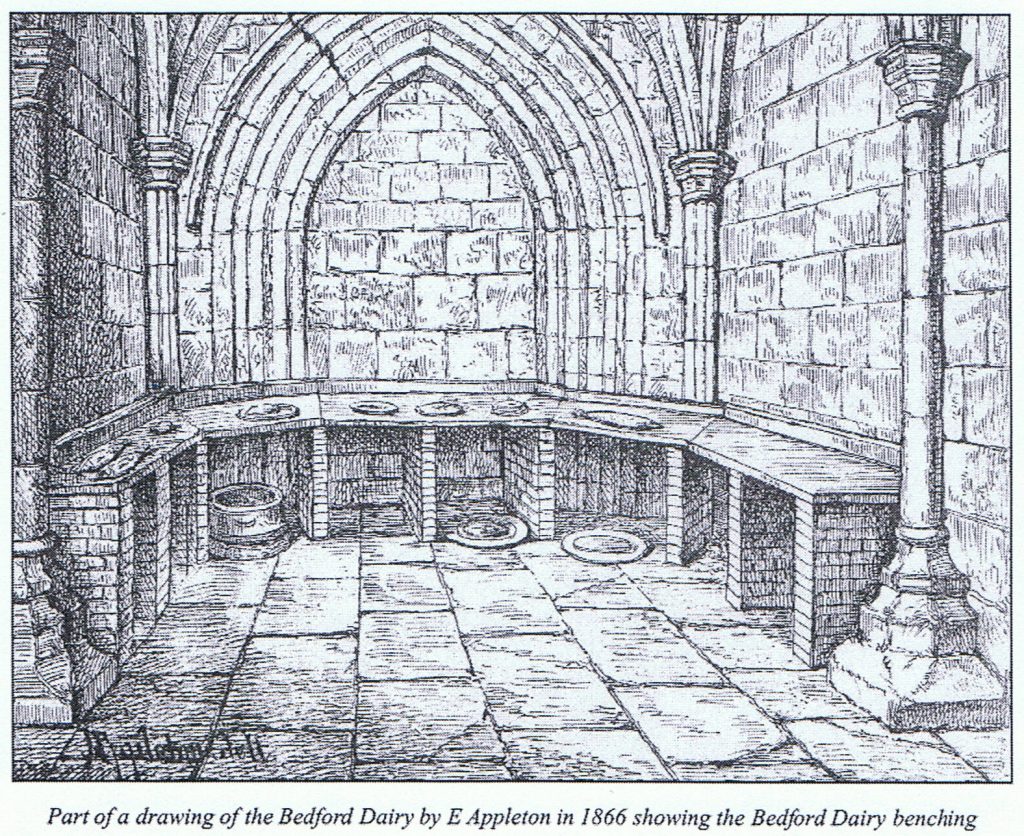
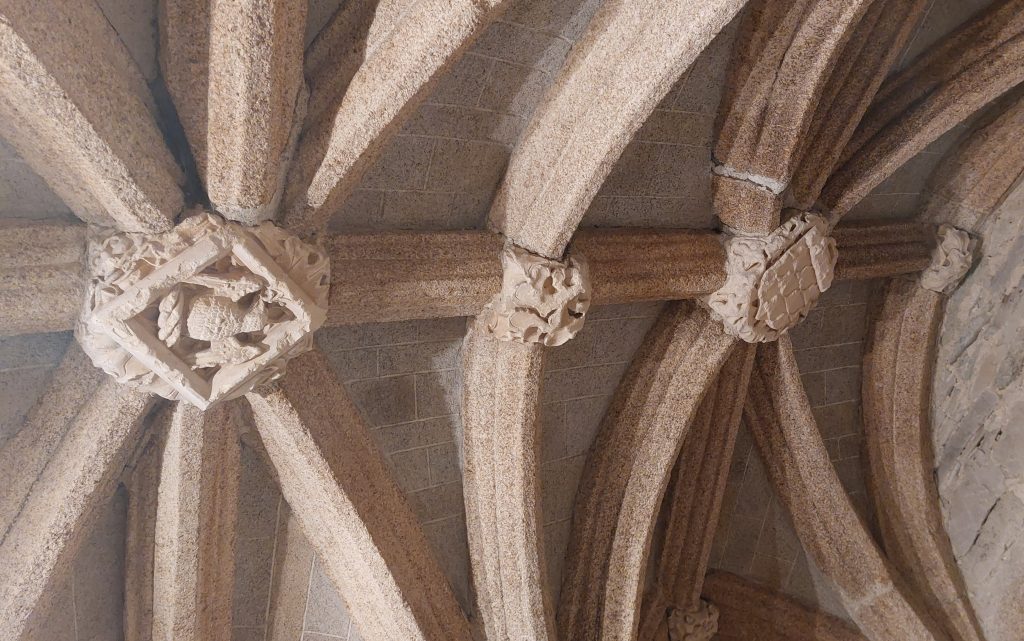
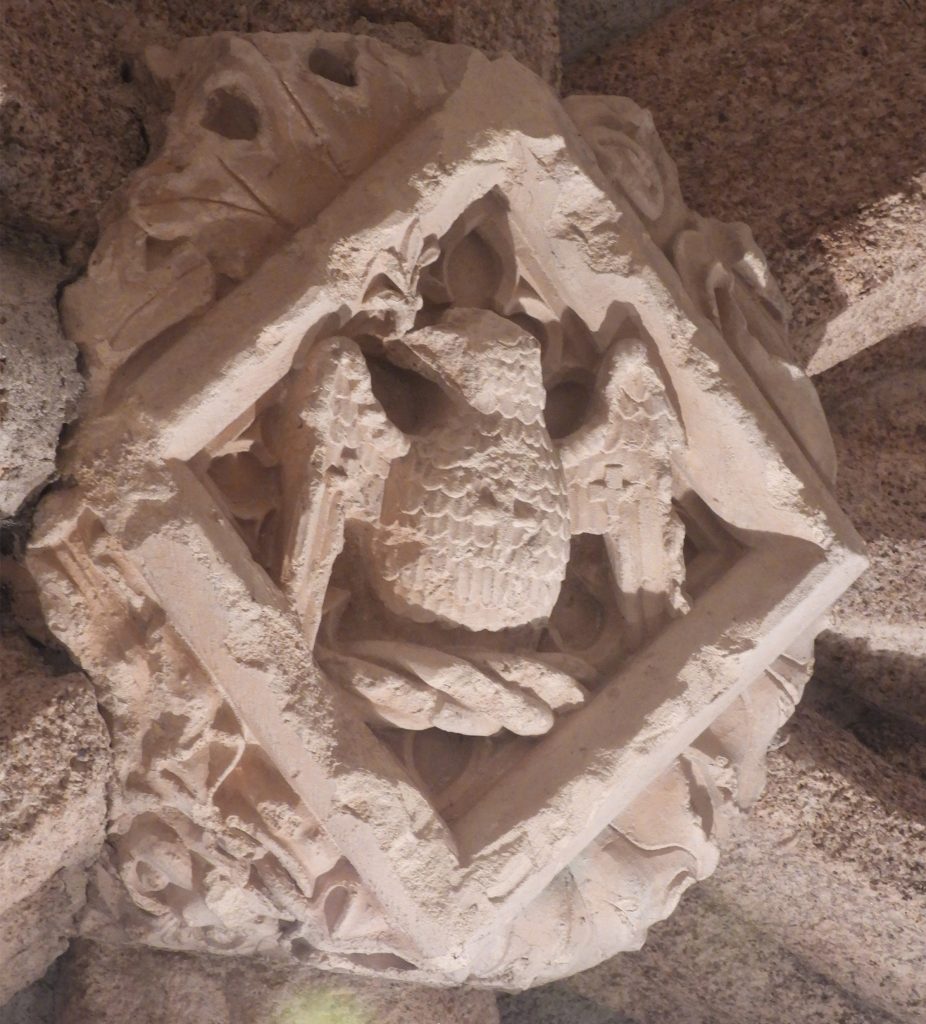
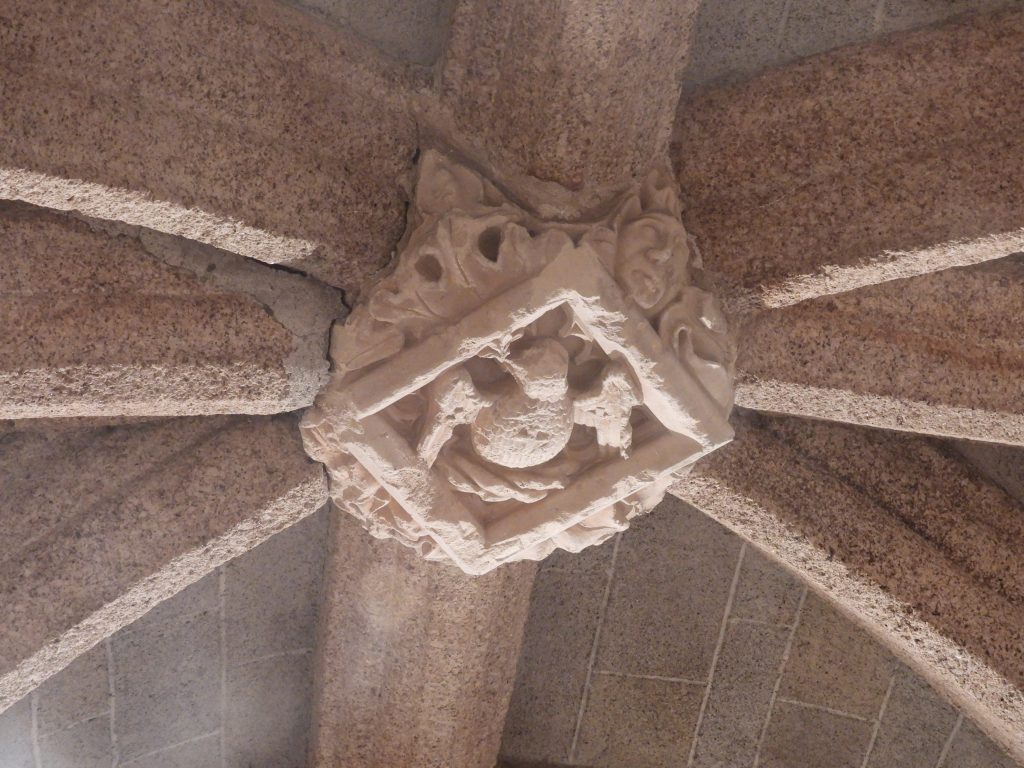
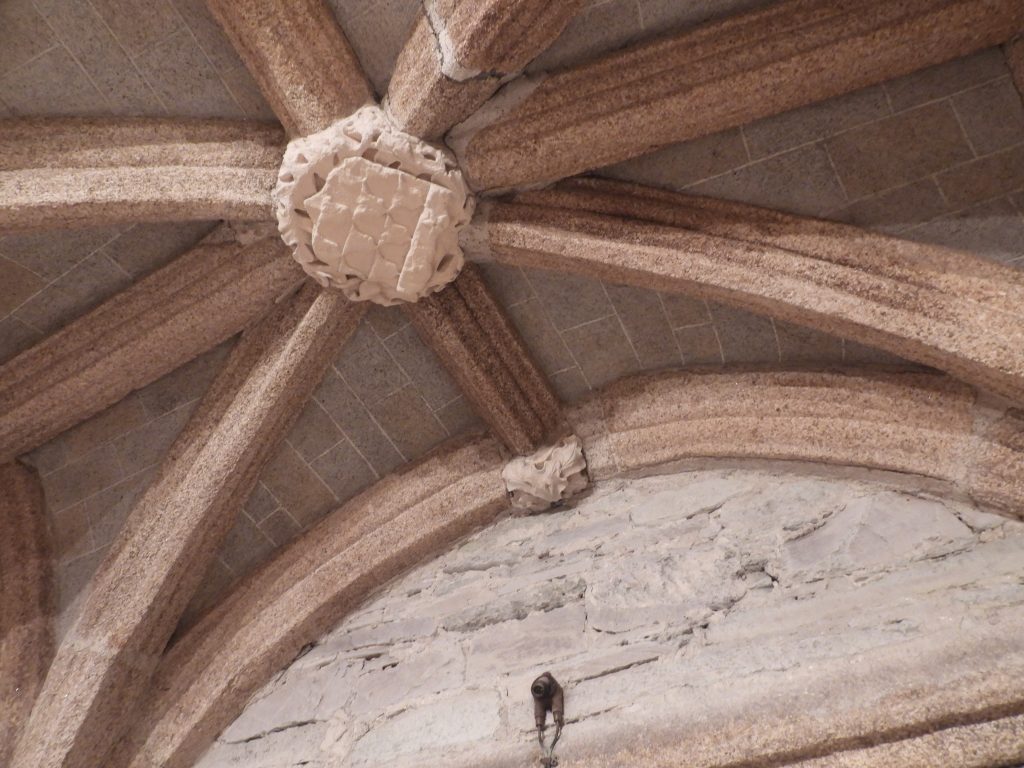
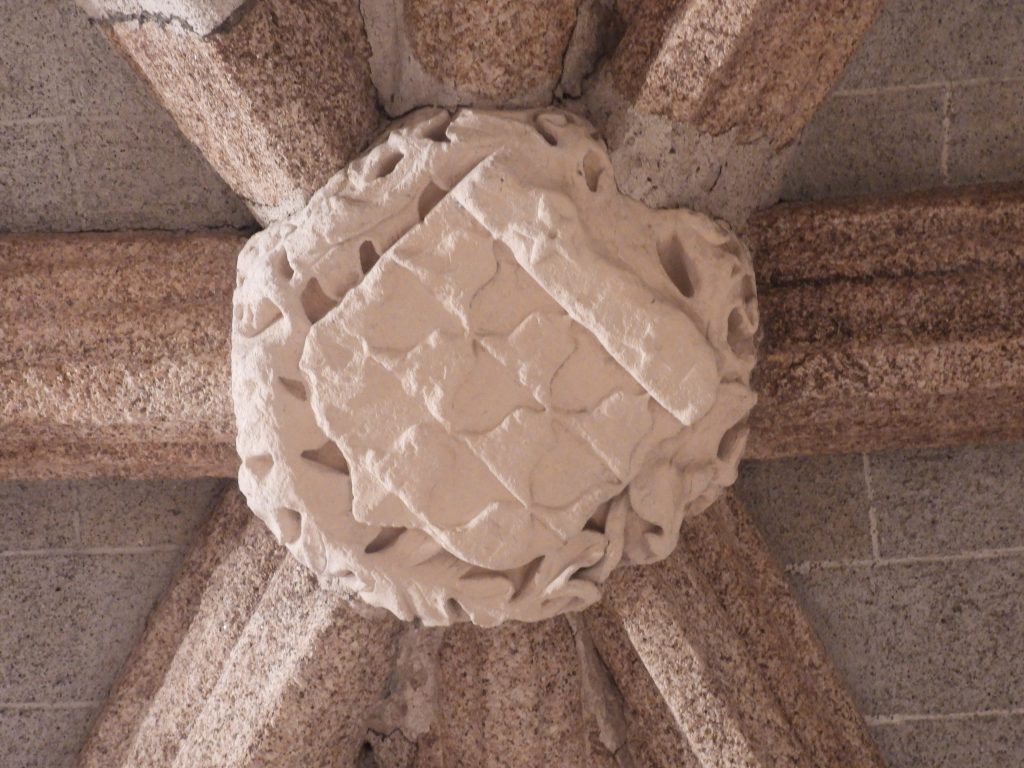
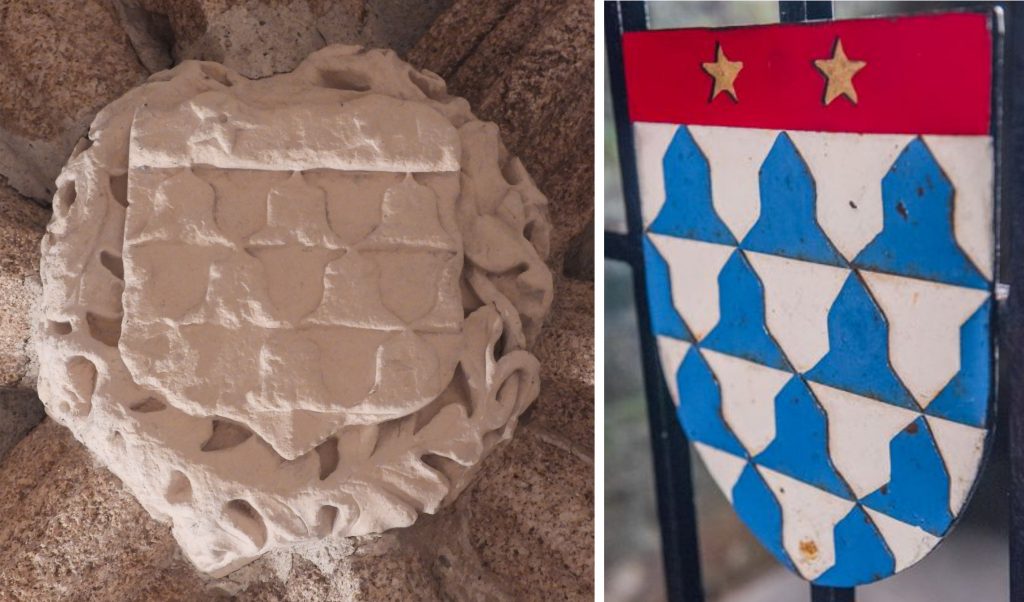
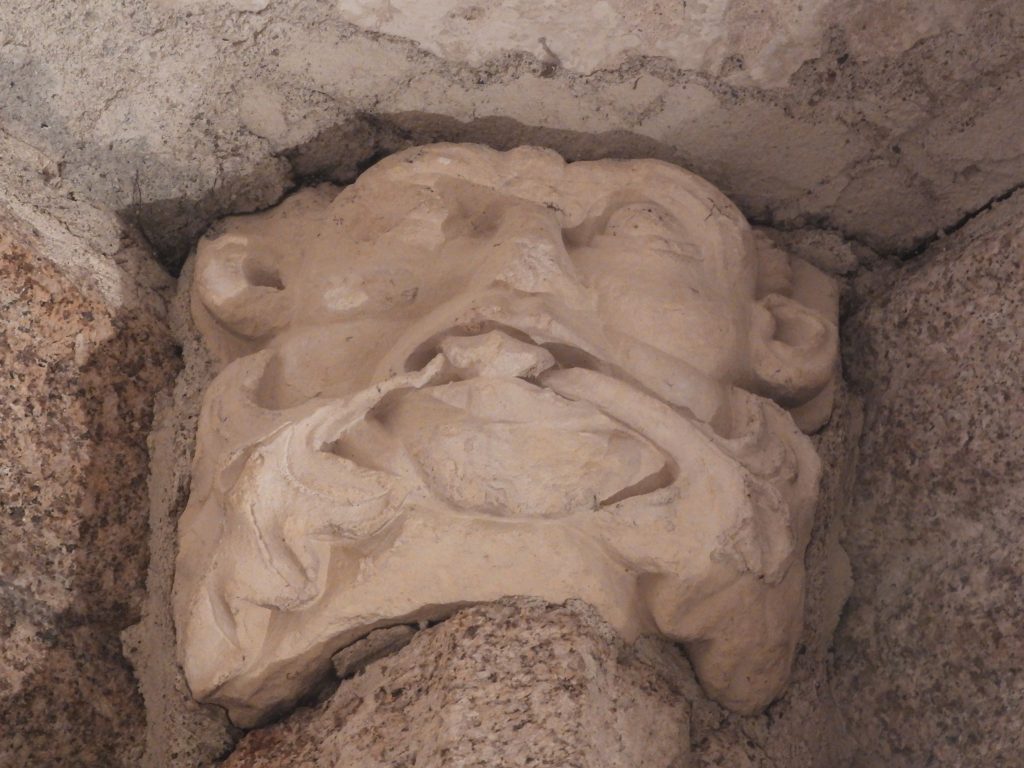
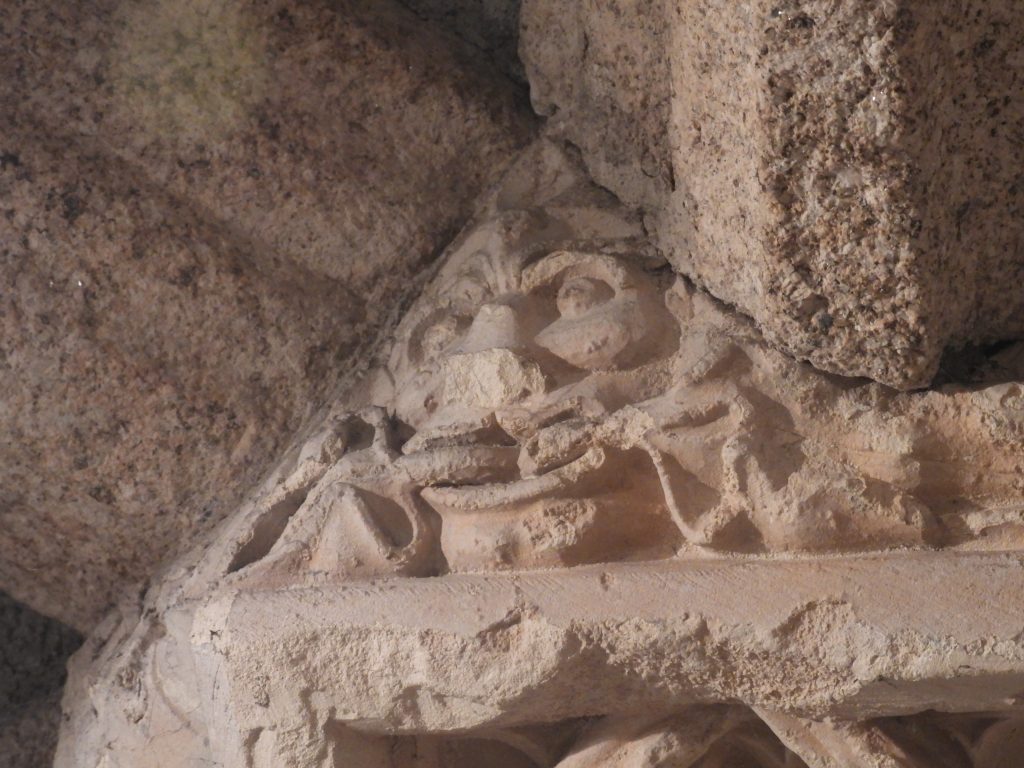
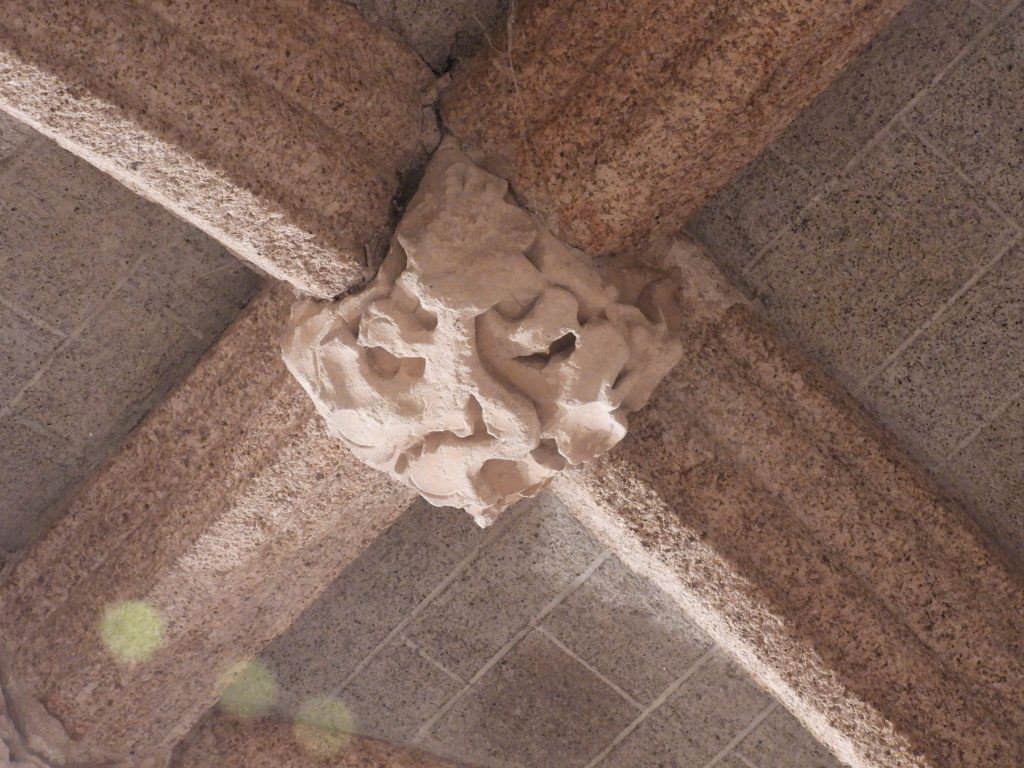
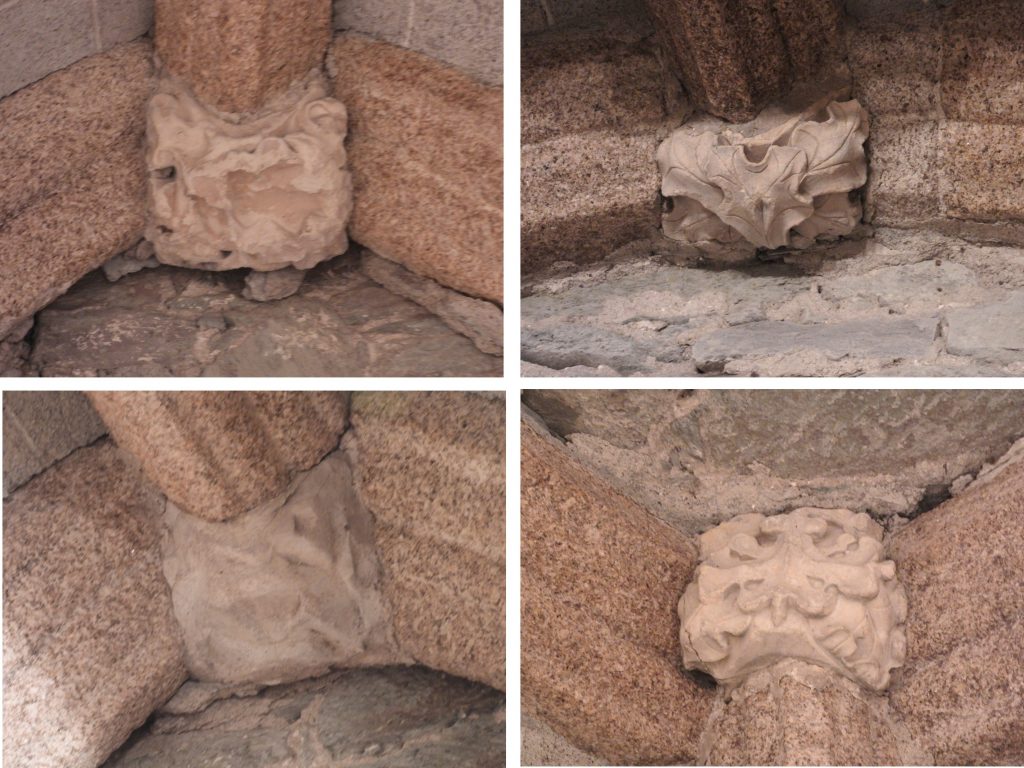
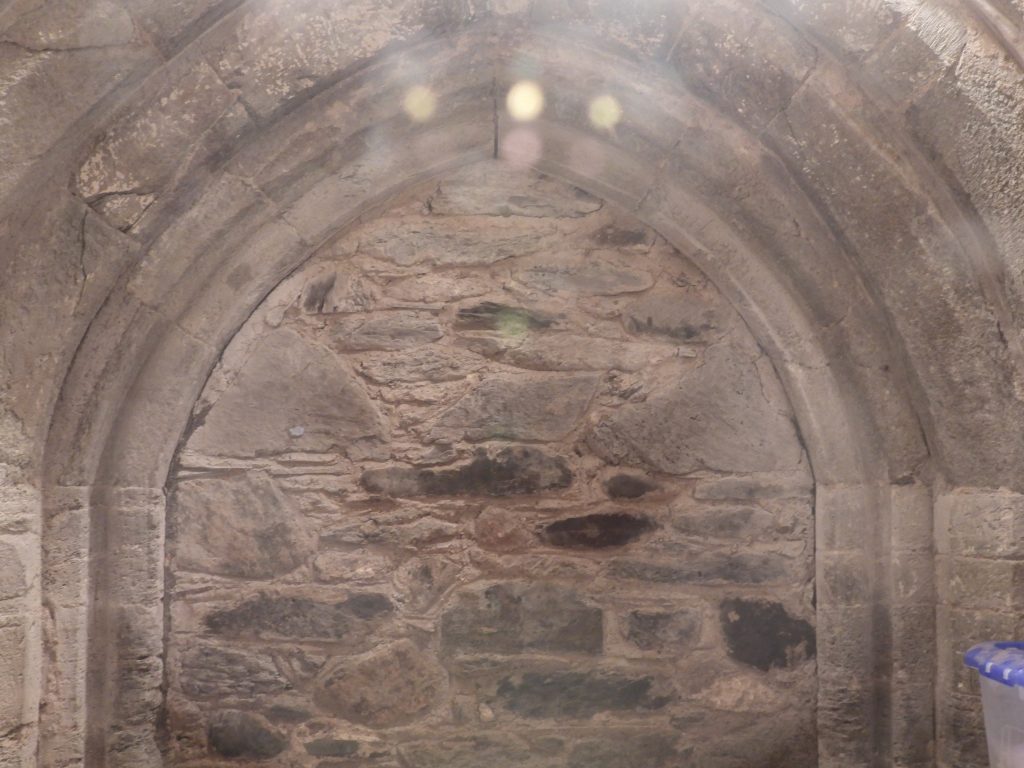
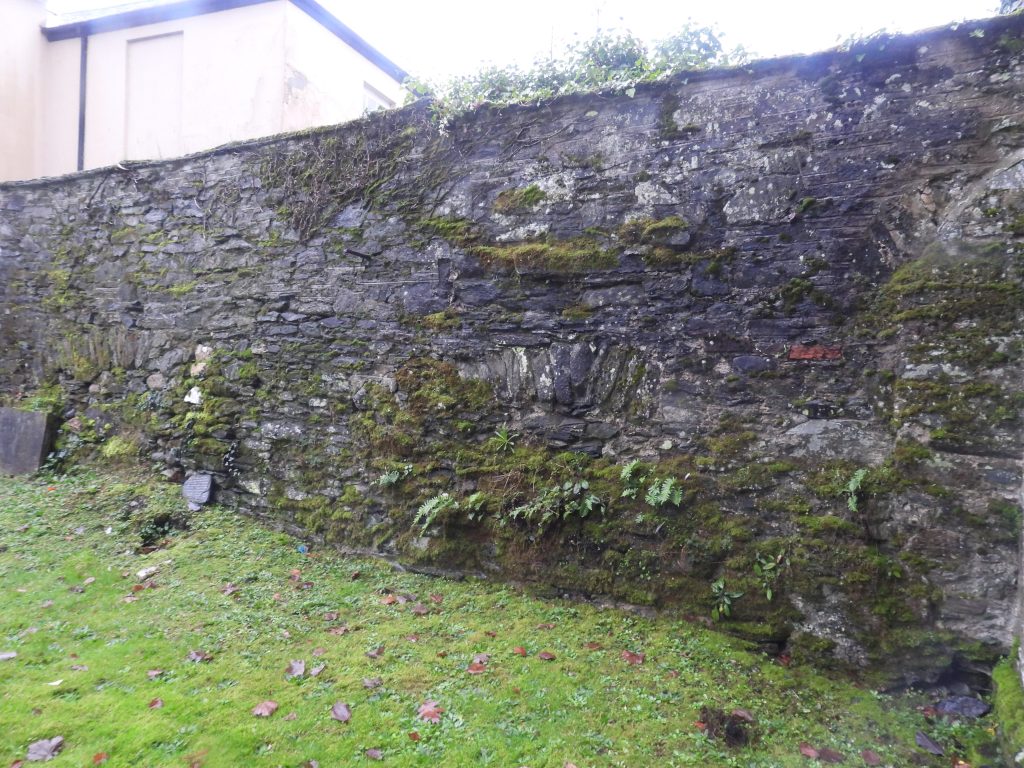
The Abbey Porch was once in use as a dairy for the Bedford Hotel which had been converted from the former Abbey House in about 1822 (some references say 1821) by the Duke of Bedford.The Porch doorway from an old postcard taken circa 1910The entrance arch to the Tower / Abbey Porch in 2025The archway in its modern setting lies immediately next to the hotel kitchensThis is the ‘other side’ of the archway and inside the Tower / Abbey Porch. Sometime after 1967, this northern entrance to the porch was blocked off and a small side door was made (shown previously in this post)The Bedford Hotel dairy (Abbey Porch) as depicted in 1866. The dairy ‘slates’ have long since disappeared. Some of the beautifully carved bosses on the groins of the vaulted ceiling within the Abbey Porch. Simon Dell records in his unpublished article that “The bosses were noted by a civil war soldier in 1644, when the painted arms of Oldham were also still present within the hall”. One boss shows the heraldic arms of the abbey (right), one an image of a bird with a twig in its beak (left)Close up of the ‘bird boss’. It has Latin crosses on its breast and wings and is possibly a dove or eagle carrying an olive branch.The bird appears to rise from a wreath of thorn twigs, a symbol of Christ’s passion. Perhaps carved at a time following the Banham / Oldham quarrel ?The abbey coat of arms near the entrance doorway Close up of the abbey coat of arms on a boss on the vaulted ceilingThe abbey coat of arms came about because it provided military support to the king, which in turn maybe assisted Richard Banham getting the support from the King against Hugh Oldham. The heraldic description is: Vaire azure & argent a chief or two pierced mullets gules. It represents furs sewn head to tale in blue and silver. There is a red band with two gold stars with holes in.On the south east side is a face is supposed to refer to Abbot Banham. The ‘Green Man’ has his tongue out and foliage emerging from the mouth and maybe an image for the sacrament of confession and penance, concerning the Abbot (Dell)A second ‘Green Man’. The face emerges from the leaves surrounding the boss, on the north west side. The image would probably have symbolised reconciliation with holy Church (Dell)Another boss on the vaulted ceilingMore miscellaneous bosses in the Abbey Porch. In 1501, Abbot Richard Banham, welcomed Catherine of Aragon* to the Abbey on her journey to London to marry the King’s son (Arthur). Did she pass through this porch ? *Of course, she later married Henry VIII and the story turns full circle as he was responsible for the dissolution of the monasteries after which much of the Abbey was destroyed over the centuries The former doorway entrance to the Abbey Chapel / Misericord (Infirmary Hall)This old archway is located in front of the 1841 entrance to the Abbey Chapel and would have been part of the original buildings here orientated north west / south east which extended into the now car park behind View from Spar shop / post office car park. To the left is the Abbey Chapel, which was originally built as a dining hall for the sick (Misericord). To the right are the outlines of doorways to buildings which once were in front of the Abbey Chapel (or Misericord).