
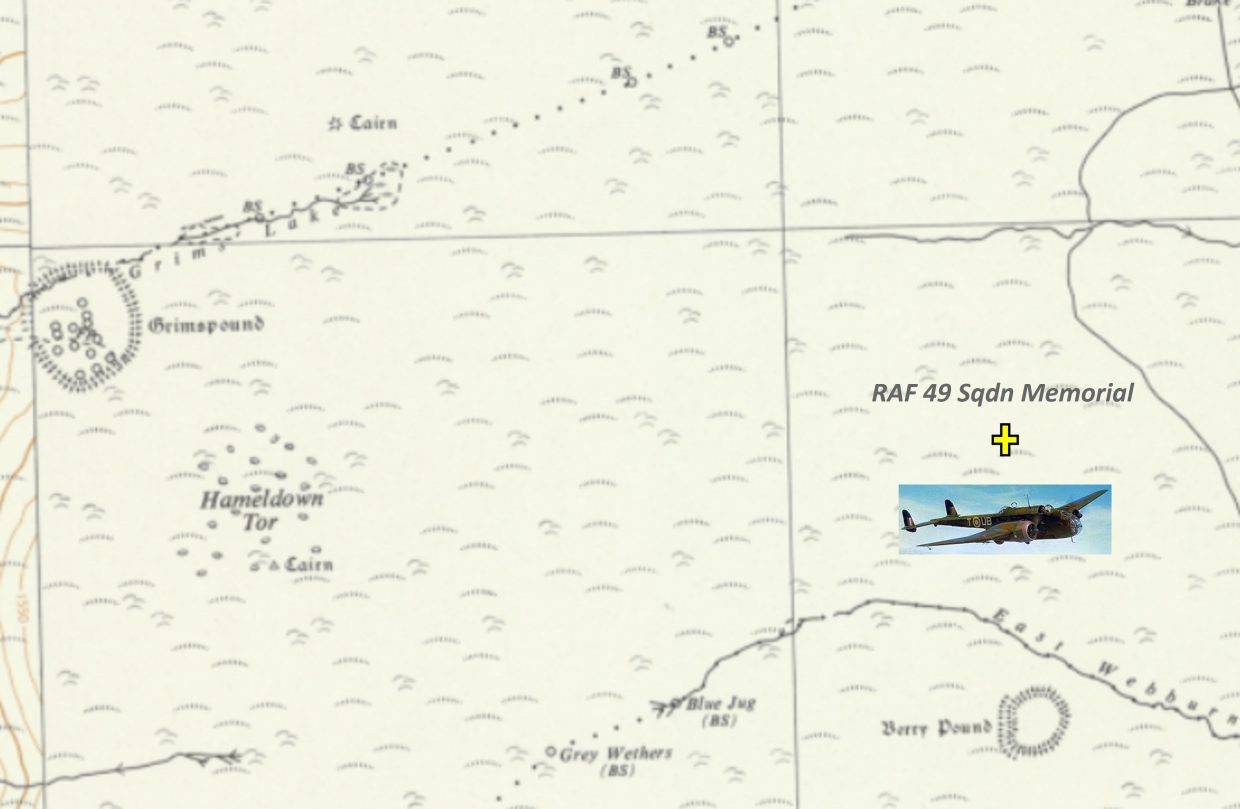
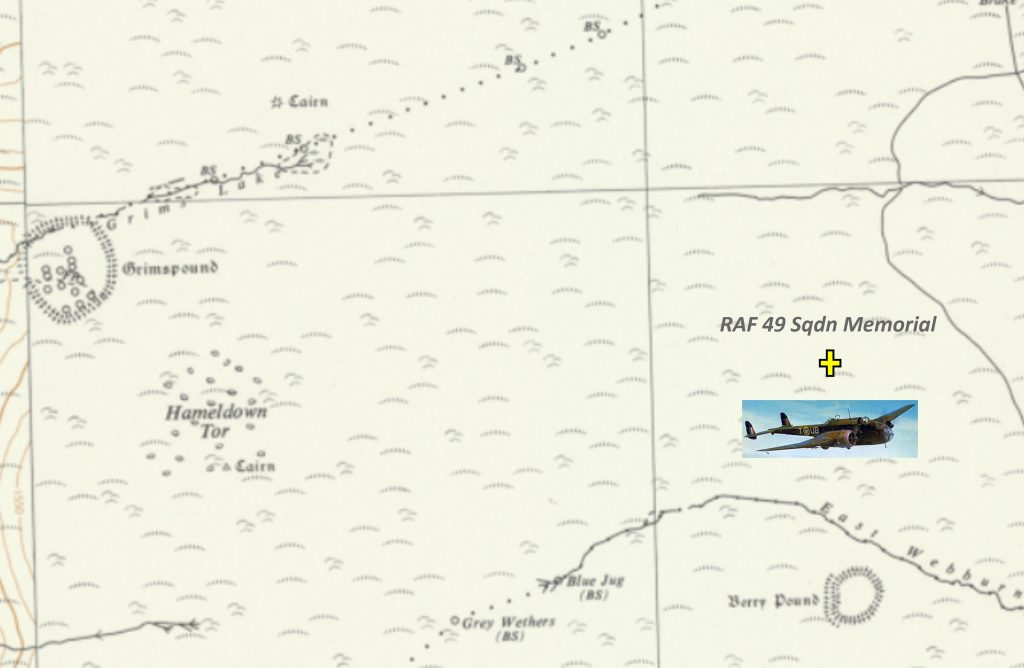
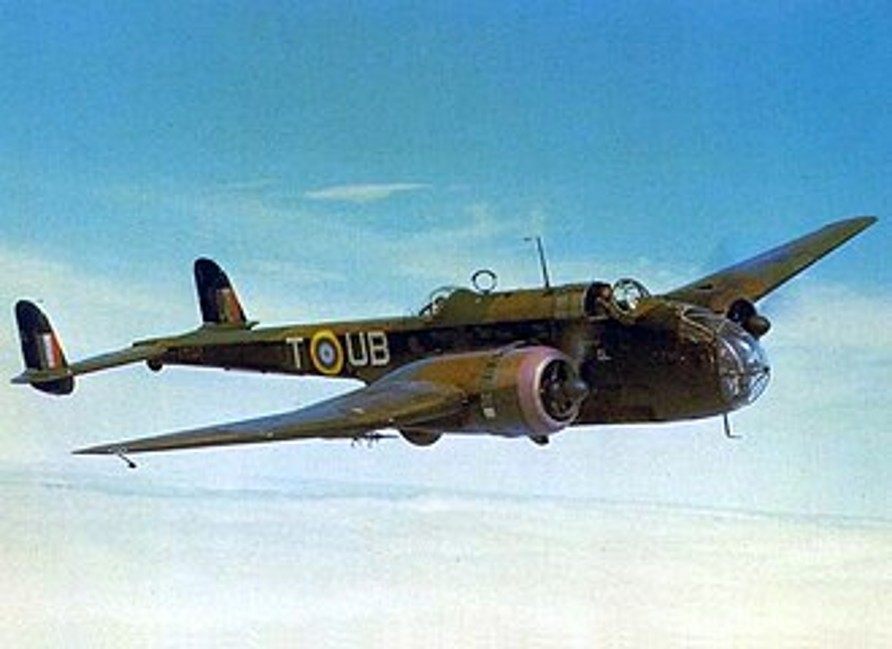
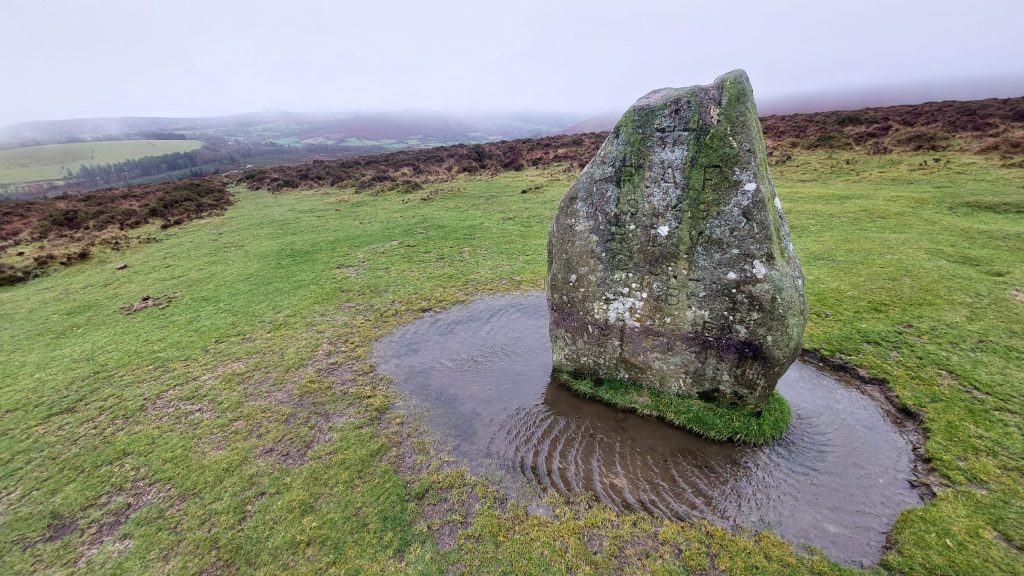
All the WWII crash sites on Dartmoor where there were fatalities, are sombre places and ones thoughts turn to silent reflection and gratitude for those who paid the the ultimate sacrifice for our liberation. One of the more well known crash sites is of a Handley Page Hampden (X3054) on the north eastern slopes of Hameldown since there is a large 6ft granite memorial erected here and the fact it is relatively close to the road at Natsworthy Gate (from the east) and Firth Bridge (from the west).
The story relating to the crash begins at 18:20 in the early evening of Friday 21st March 1941, when six Handley Hampdens of 49 Squadron (RAF Bomber Command) took off from RAF Scampton, Lincolnshire. Their operation along with sixty five other aircraft (Lowe) was to bomb the submarine base at Lorient, southern Brittany, France (U-boat base). The Hampdens in the operation were also tasked to lay mines (referred to as ‘gardening’) in the estuaries of Brest and Bordeaux. One of the six Handley Hampdens from RAF Scampton was serial X3054, with four young men on board: Hon. Pilot Officer Robert David Wilson (25); Co-pilot / Navigator Sgt Richard Leonard Ashburton Ellis (23); Wireless Operator Sgt Charles John Lyon (23) and Rear Gunner Sgt Ronald Brames (22). Sgt Ellis from South Africa was on his first mission with the squadron.
The squadron code was EA-S or S ‘sugar’. Having completed their mission S ‘Sugar’ set about their return journey to RAF Scampton. However, the crew of the aircraft encountered problems with their radio during their return journey resulting in them being unable to get a ‘fix’ on their position. The weather was poor and without knowing exactly where they were they unfortunately too low over high ground and crashed* into the hillside of Hameldown (approx. 1570ft above sea level), breaking up and catching fire. The crash occurred at around 22:50. Three of the crew were killed instantly, with P/O Wilson surviving being pulled out of the aircraft barely alive. He never regained consciousness and died the next day (22nd March) in hospital.
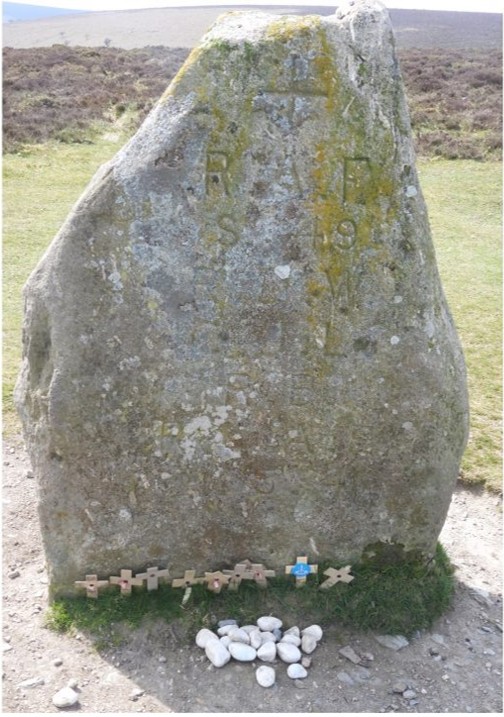
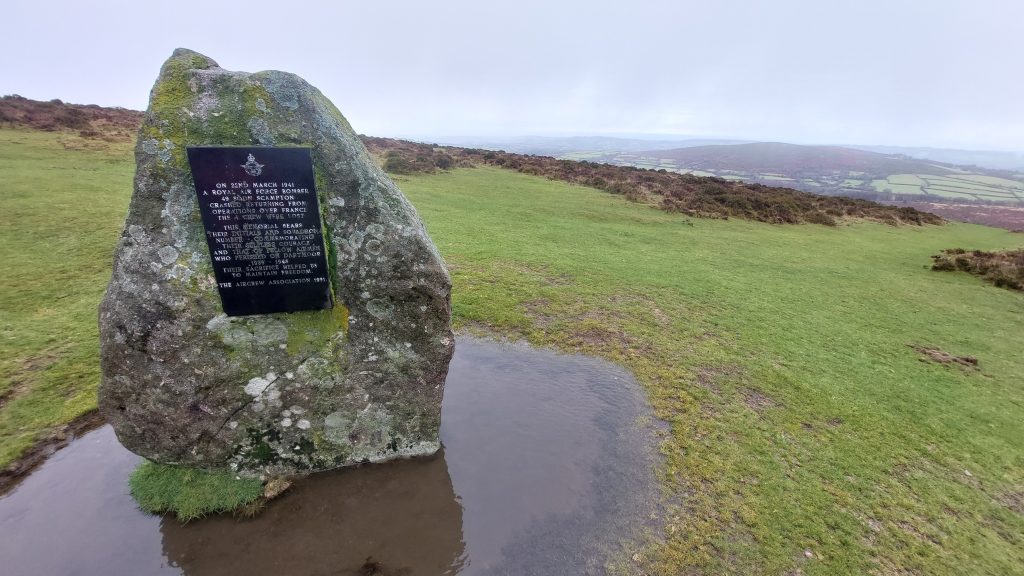
P/O Wilson’s mother (Lady Marjorie Wilson) had a 6ft granite memorial erected at the site of the crash, approximately where the cockpit came to rest. On one side of the memorial is the date 21st March 1941 and the initials of the four brave airmen inscribed upon it. On the reverse side, in 1991 the Torbay Aircrew Association fixed a plaque as a further memorial. The plaque has the date 22nd March 1941. Thus the date of the crash and the date of the death of P/O Wilson are both commemorated.
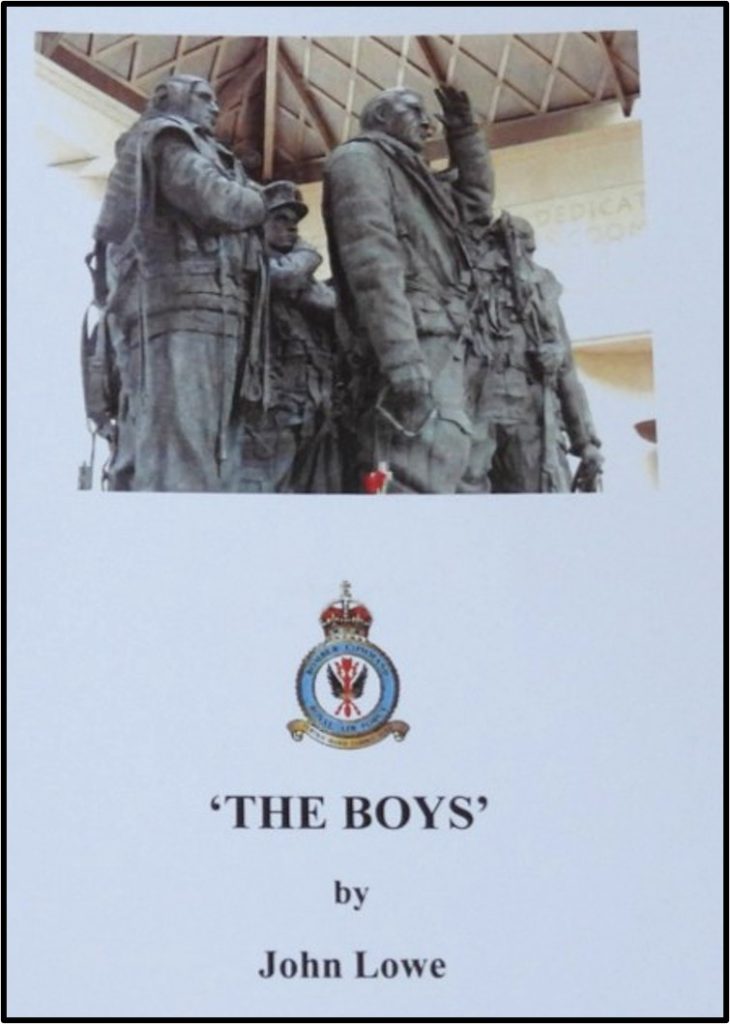
- Lady Marjorie Wilson recorded shortly after the ‘crash’ (published in John Lowe’s ‘The Boys’) the following: “At 11 o’clock the plane was heard flying very low and just missed Widdicombe (sic) Church. It then rose to extra height, and all but reached the summit of Widdicombe Hill, which is 1,700 feet above sea level, and covered in heather. An almost perfect landing was made in the pitch darkness right into wind, but the incline of the hill was too steep, and the propellers dug themselves into the soil. One engine was flung over 100 yards away: the tail piece came off, and of the crew of three, one Sergeant Ellis – was flung clear, but the other two were trapped under the wing. The engine was shut off, and the landing wheels were down, which proves that David had not flown into the hill by mistake”. From this account P/O Wilson’s mother was adamant that her son had not crashed the plane but had attempted to land. There appears to be more than one possible scenario relating to the events of 21st March 1941
Bibliography
- Eric Hemery – (1986) – Walking Dartmoor Ancient Tracks (Miners’ Path – page 272)
- John Lowe – ‘The Boys’
- Robert Jones – (2015) – Dartmoor Air Crashes (A Sombre Place- pages 25-28)
- Graham Lewis – ( 2016) – Wings over Dartmoor (Hamel Down Hampden – pages 36-39)
- Stephen Woods – (2000) – Uncle Tom Cobley and All: Widecombe-in-the-Moor
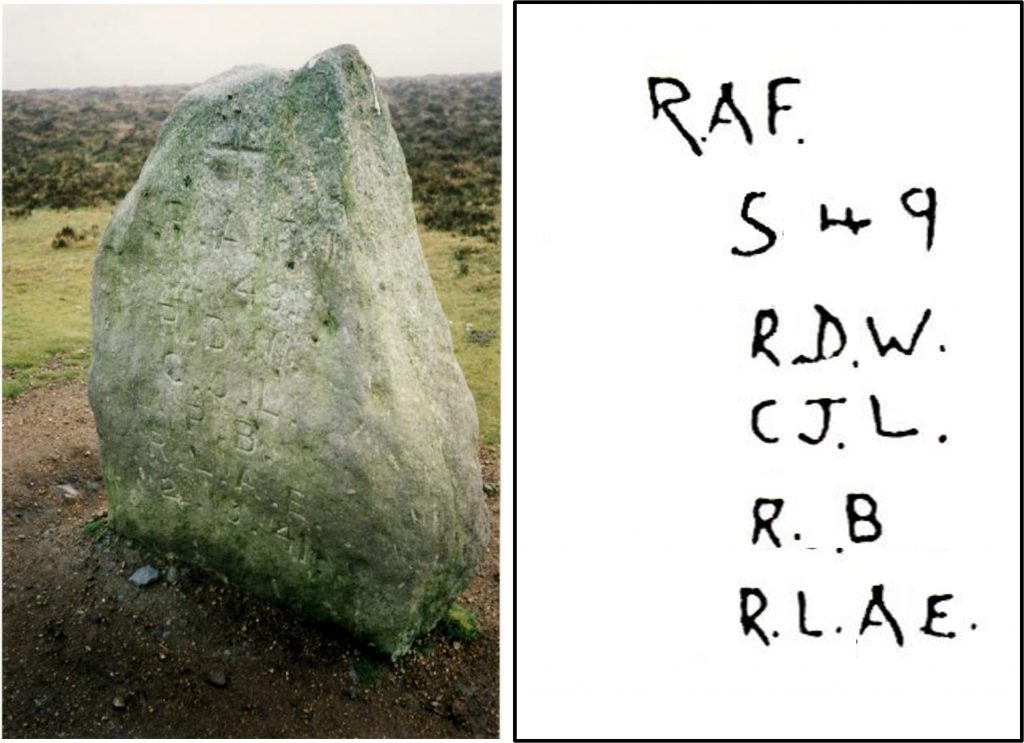
R A F
S. 49
R D W
C J L
R B
R L A E
21.3.41
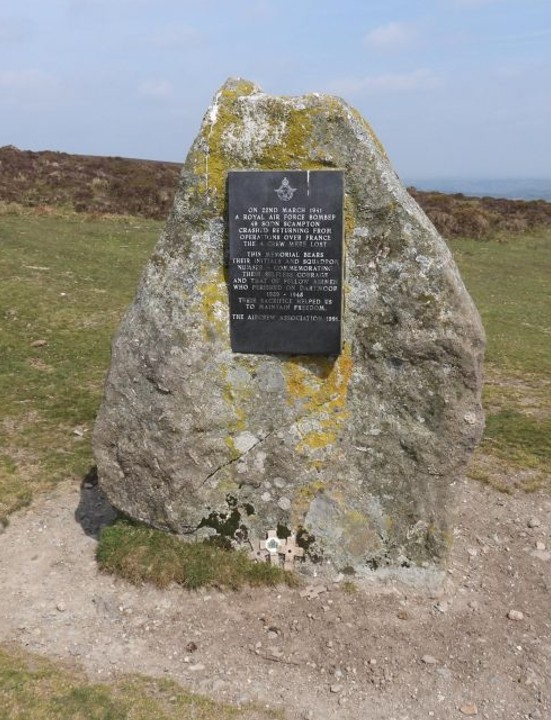
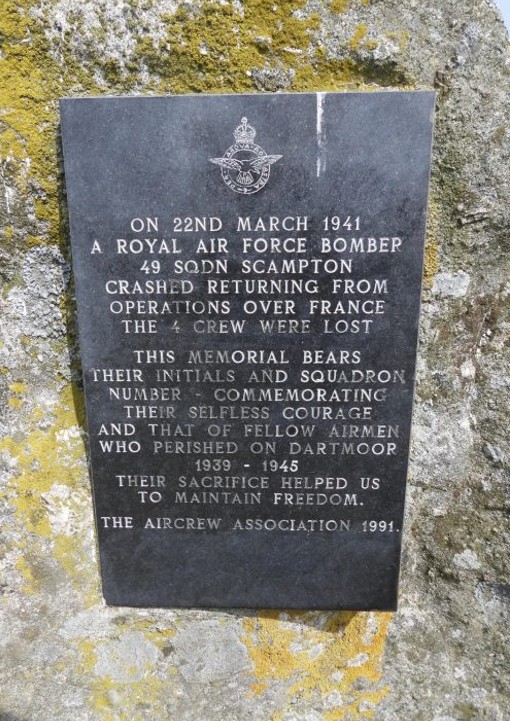
ON 22ND MARCH 1941
A ROYAL AIRFORCE BOMBER
49 SQDN SCAMPTON
CRASHED RETURNING FROM
OPERATIONS OVER FRANCE
THE 4 CREW WERE LOST
THIS MEMORIAL BEARS
THEIR INITIALS AND SQUADRON
NUMBER – COMMEMORATING
THEIR SELFLESS COURAGE
AND THAT OF FELLOW AIRMEN
WHO PERISHED ON DARTMOOR
1939 – 1945
THEIR SACRIFICE HELPED US
TO MAINTAIN FREEDOM
THE AIRCREW ASSOCIATION 1991
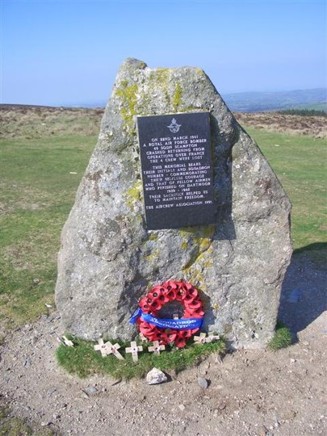
They shall not grow old as that are left grow old, Age shall not weary them, nor the years condemn, At the going down of the sun, And in the morning, We will remember them (taken from ‘The Fallen’ by Laurence Binyon)